
04/09/2025
1989 and “The Judge's Shadow” - Colombian Cinema with Memory
By Sandra M. Ríos U
X: @sandritamrios
1989 and “The Judge's Shadow”: Colombian Cinema with Memory | Film Review: Libia Stella Gómez sets her new film in 1989, tackling corruption and violence in Colombia through a political thriller. A judge confronts his past while the country recalls a tumultuous year.
In 2005, Libia Stella Gómez debuted with the crime thriller The History of the Pink Trunk, set in the 1940s with a political backdrop, making her the second Colombian woman to release a fiction feature in commercial theaters, following Camila Loboguerrero (who in 1984 released With His Music Elsewhere through Focine), just two years after Colombia’s Cinema Law 814 was enacted. In 2020, she broke new ground again with A Certain Alonso Quijano, the National University’s first original production released for free on YouTube, adapting to pandemic circumstances.
For her fourth fiction feature, she ventures into underexplored territory in Colombian cinema with the theatrical version of her 2024 regional TV miniseries El rastro, her first foray into television. With The Judge's Shadow, she confirms her knack for thrillers and political depth.
When Jaime Osorio Márquez (1975–2021) released the Colombian horror classic El Páramo, he spoke of it as a reflection on how terror and guerrilla warfare were equivalent, both becoming symbols of societal fear and paranoia. While Gómez takes a different path, her film also uses genre to weave historical memory, exploring how violence and corruption blur the lines between good and evil in Colombia’s conflict.
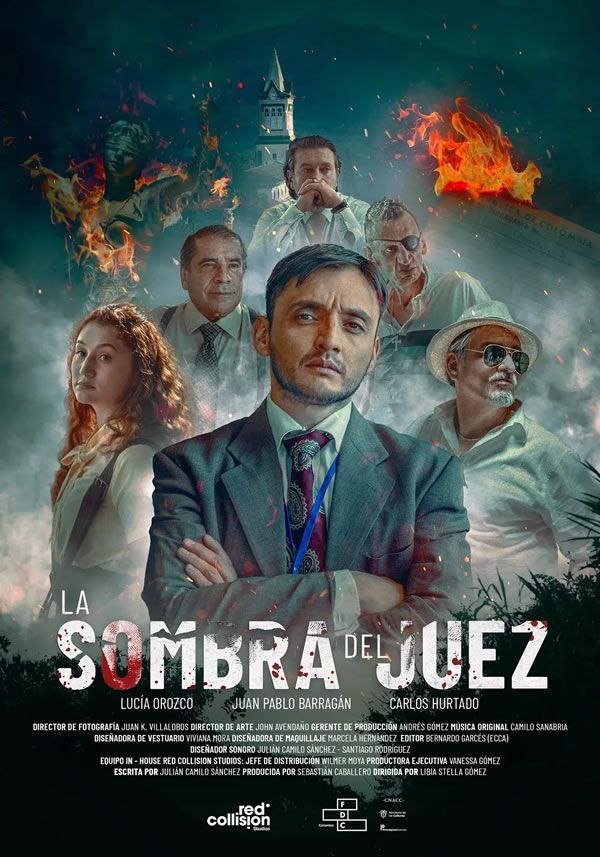
Set in 1989, the story follows David Gutiérrez, a new judge arriving in a town. The community, plagued by dark forces and factions that have stripped their lands for decades, hopes for justice. But a damning secret corners David, forcing him to choose between self-preservation or doing what’s right.
The series El Rastro, written by playwright Julián Camilo Sánchez, spans six episodes depicting how paramilitaries seized control of entire towns in the late ’80s and early ’90s.
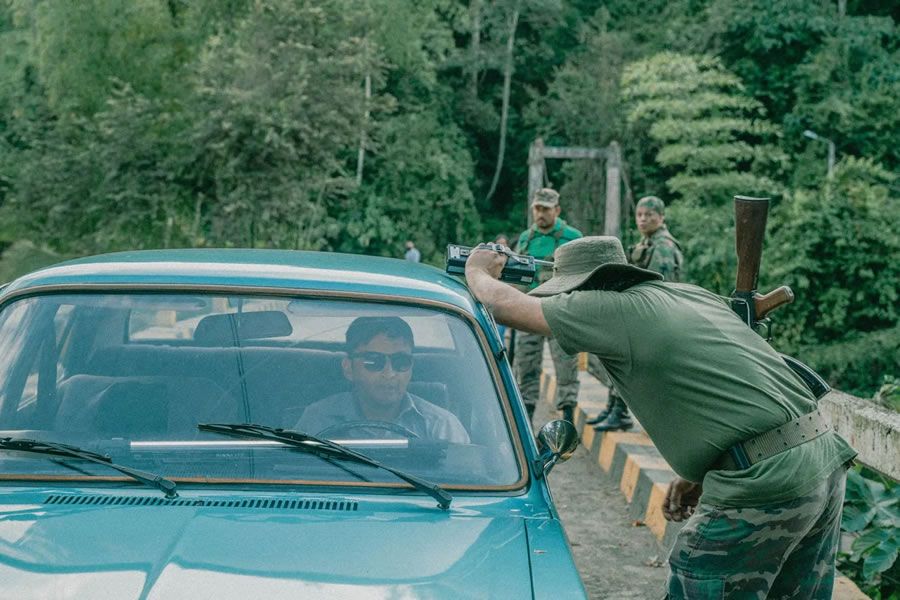
The film retains the same plot and characters. As the fictional thriller unfolds between the judge and a landowner controlling local self-defense groups, Gómez leaves traces of 1989’s chaos, just after Luis Carlos Galán’s assassination. That year also saw the murders of prosecutor Carlos Mauro Hoyos and commander Valdemar Franklin Quintero, the DAS building car bomb, the attack on El Espectador newspaper, and paramilitary massacres in La Rochela and Segovia, exposing ties between narcos, paramilitaries, and state sectors, triggering mass displacement. In 1989, the far-right party National Renewal Movement (Morena) was founded in Bogotá by Iván Roberto Duque, alias “Ernesto Báez,” an advisor to the Magdalena Medio Farmers and Ranchers Association (Acdegam).
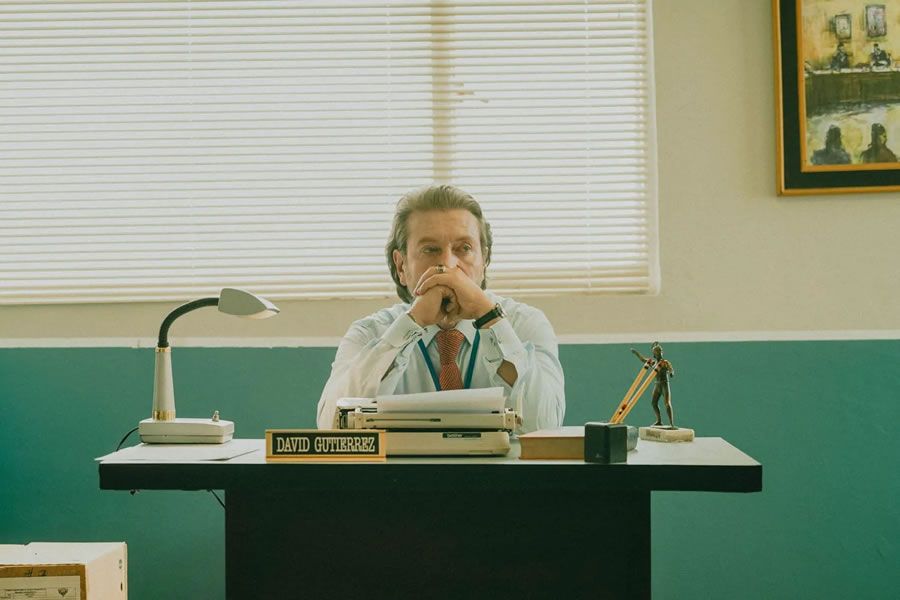
Edited from the six-episode series, the film avoids feeling disjointed, especially after the judge’s truth unravels early. Engaging twists keep the plot compelling, building a convincing thesis beyond the protagonist, showing how ambition, betrayal, and corruption taint everything.
The Judge's Shadow relies on strong performances, with Juan Pablo Barragán as a judge who shifts from reserved to conflicted, hiding his true identity, and Carlos Hurtado as the antagonist Ismael Mateus, a shadowy force whose presence looms large. Gómez casts Hurtado, known for comedy, in a dramatic role to showcase his range.
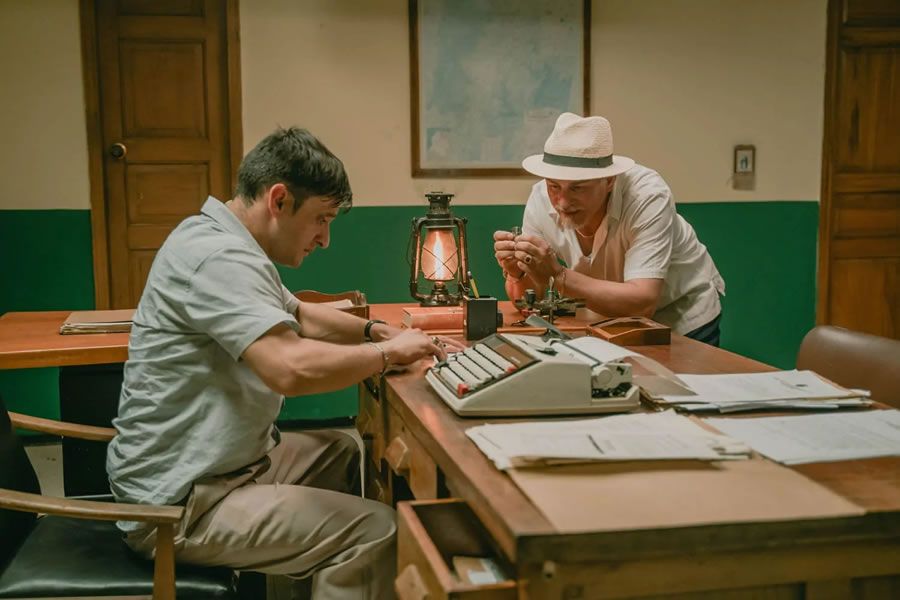
A well-crafted, entertaining film, The Judge's Shadow confronts Colombia’s collective ghosts with a critical lens and polished aesthetic. Its ending brilliantly reflects the moral ambiguity of the conflict and distrust in institutions, encapsulating 1989’s lasting impact: violence persisted with the rise of the AUC and FARC, the 2000 Plan Colombia escalated militarization, and despite the 2016 FARC peace deal, displacement, inequality, and new armed groups show the late ’80s’ shadow lingers.
The film is part of Colombian Cinema Month releases.
Technical Details
- Director: Libia Stella Gómez
- Screenplay: Julián Camilo Sánchez
- Duration: 111 minutes
- Producer: Sebastián Caballero
- Cast: Juan Pablo Barragán, Carlos Hurtado, Lucía Orozco, Walther Luengas, Álvaro Rodríguez
- Cinematography: Juan Carlos Villalobos
- Music: Camilo Sanabria
- Editing: Bernardo Garcés
- Country: Colombia
- Year: 2025
<< Go to Spanish version