
11/27/2024
Dear Gentlemen - Patricia Castañeda and the Forgotten Suffrage
“Dear Gentlemen": Patricia Castañeda and the Forgotten Suffrage. We interviewed the director of the film that, for the first time, brings the untold story of Colombian suffragists to the big screen.
Just seven decades ago, Colombian women won the right to vote, signifying recognition as citizens, including the issuance of ID cards. Carola Correa de Rojas Pinilla, wife of President General Gustavo Rojas Pinilla, became the first woman to receive one in May 1956. A year and a few months later, the historic event of the first women’s vote in Colombia took place.
This milestone, long kept in the shadows, now comes to the big screen in a fictional story that also marks the directorial debut of actress and writer Patricia Castañeda.
The film premieres as a law was passed this year to honor the Colombian women's suffrage movement, aiming to spotlight the nine protagonists behind this achievement. "It took me a long time [to research] because, sadly, there’s no information… the lack of books about them is heartbreaking. There was no information, nothing. I think 99.9% of this country doesn’t know who Esmeralda Arboleda is, doesn’t know Josefina Valencia, doesn’t know Berta [Hernández], doesn’t know María Currea or María Teresa [Arizabaleta]. They don’t know who any of these women are,” the director told CineVista. This part of history, omitted even in schools, remains widely unknown. "We should know these names by heart."
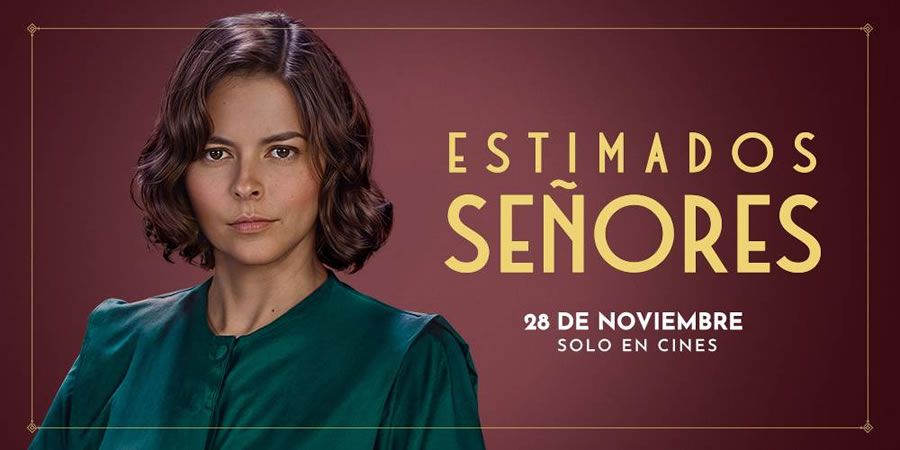
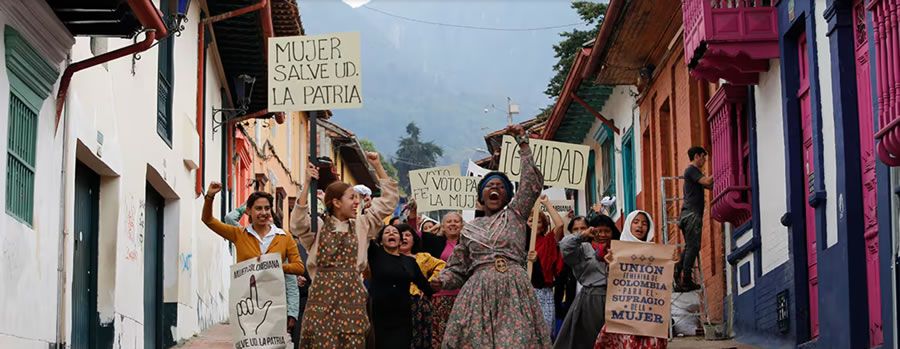
The nine names are: Josefina Valencia de Hubach, Esmeralda Arboleda, Ofelia Uribe, Lucila Rubio, Bertha Hernández, María Teresa Arizabaleta, Rosita Turizo, Mercedes Abadía, and María Currea. However, the film centers on two main characters: Esmeralda Arboleda and Josefina Valencia, as they were part of the planned National Constituent Assembly, representing the Liberal and Conservative parties, respectively. The story focuses on the decisive meeting where the right to vote was approved. “My goal was to show what they had to do.”
Given the scarcity of historical records, the film blends real events, moments, and anecdotes while omitting others to create a stronger narrative—an expected liberty in fiction. According to Castañeda, the result is a “deeply emotional movie that transports us to the moment when brave women started a movement and fought a war.”

The release of the first scenes sparked comparisons between past and current feminism and raised questions about the film’s perspective. "To me, a feminist is a woman seeking equal rights. That’s it. No need to complicate it… In that sense, it’s a feminist film. It’s also a feminine one, as it’s directed by a woman,” Patricia explained. She added about the film’s perspective: “This is my point of view, yes… it’s Patricia Castañeda’s view, who wrote it. I’m sure many things didn’t happen that day, perhaps they happened later or earlier. The challenge was to condense many events into a 98-minute film.”
Beyond the creative instinct of narrating an untold story, Patricia’s motherhood significantly influenced her decision to take on such an ambitious project. “I’ve often been asked how this story came to be, and I’ve described the physical process—the day I searched for the first page, the first book, the first person online. But as I kept answering, I started reflecting, and I think becoming a mom… that changes us all. We want to do something for them. I wanted to make a children’s film, but I didn’t… I now think this is it, and subconsciously, I made it for her. It’s for all her stages—for when she’s a child, an adult, a mother—and for those who come after her. Motherhood influenced this film 100%.”
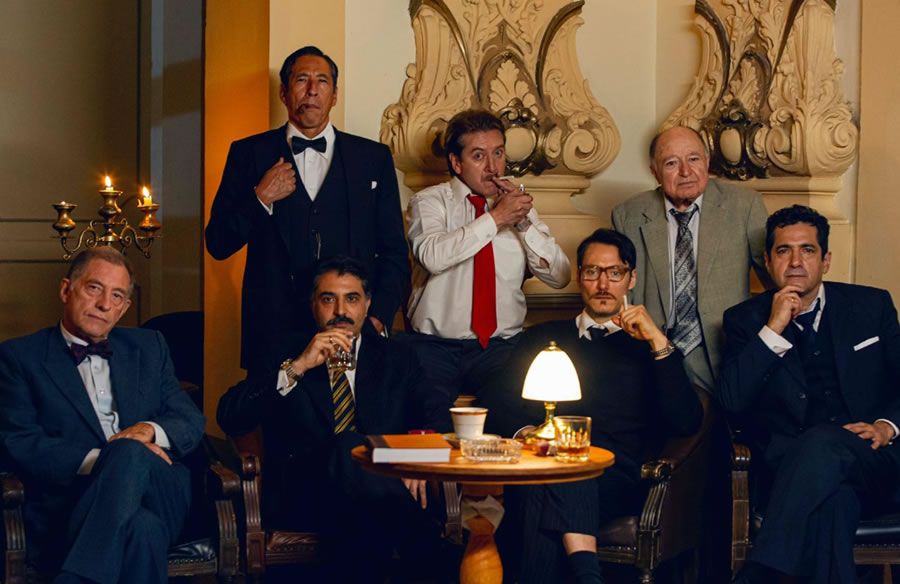
As a political drama, Patricia assembled a large cast led by Julieth Restrepo (Esmeralda Arboleda), Paula Castaño (Josefina Valencia), Marcela Mar (Teresa Santamaría), and Bárbara Perea (Bertha Hernández de Ospina), alongside Yuri Vargas, Silvia Santamaría, Claudio Cataño, Elkin Díaz, Victoria Ortiz, Alberto Saavedra, Pedro Mogollón, and Walter Luengas. The director emphasized the actors’ crucial contribution to the film’s success: “I can’t stop thanking them because actors are vulnerable and rely heavily on the director… Usually, a debut film is more experimental, quiet, almost like a trial. I jumped straight into a period piece with a cast of thirteen people constantly on set… It was rigorous, demanding work. They brought everything—their characters, their dedication. No one knows the character better than the actor. I write, but each actor focuses solely on their role, studying it deeply… The cast is phenomenal.”
“Dear Gentlemen” premieres in Colombian theaters starting November 28, followed by a national festival circuit, beginning with the Cali Film Festival and continuing through other events before year-end. There are plans for possible participation in a U.S. and U.K. festival.
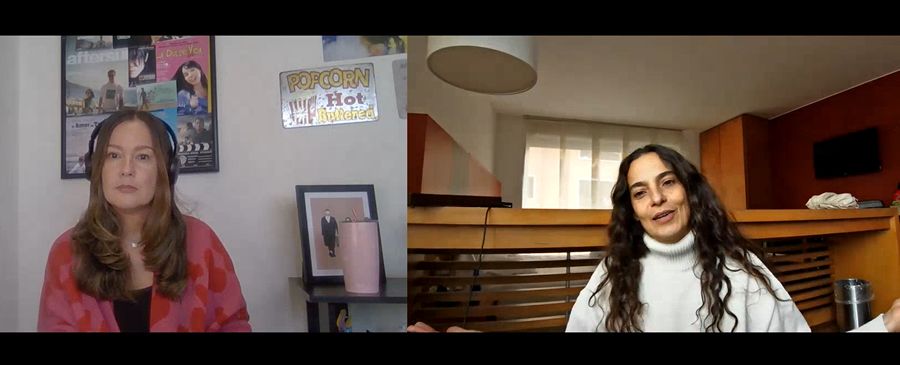
Watch the full interview where Patricia Castañeda addresses questions and reactions from TikTok users after the trailer’s release. She also discusses the title’s origin, the film’s tone, themes of machismo and feminism, her vision as the story’s author, and the film’s journey across Colombia.
<< Go to Spanish version