
02/05/2025
La Salsa Vive - New York and Cali United by Their Musical Culture
By Sandra M Ríos U
Twitter: @sandritamrios
"La Salsa Vive": New York and Cali United by Their Musical Culture | Directed by Juan Carvajal, the documentary narrates the connection between both cities through salsa, reflecting its cultural and social impact. With testimonies from legends like Rubén Blades and a personal focus, it revives the passion for this genre, from its roots to its current influence. Selected for SXSW.
There is a level of intensity, passion, chaos, rebellion, and resistance in Andrés Caicedo's novel "Viva la música" that has not been replicated with the same identity strength. Cali is salsa, salsa is Cali, and Caicedo managed to portray, with the very blond María del Carmen Huerta, the raw and vibrant nightlife of a generation that in the seventies witnessed the cultural explosion.
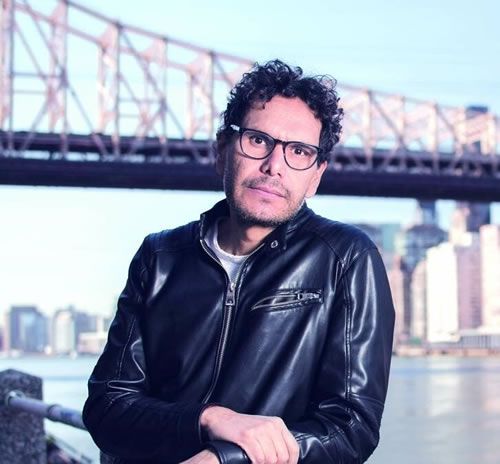
I had not remembered this posthumous work until I heard the director, also from Cali, Juan Carvajal, who, a decade later, sees his dream of bringing to the screen a story that recalls the roots of salsa and its links with New York and Cali come to fruition.
These two cities are united and have been transformed by this musical genre, with which the Colombian director has also been intimately connected; they have seen him grow and get inspired. "La Salsa Vive" is the title of this documentary that has just been selected for the South by Southwest Festival (SXSW), where it will have its world premiere in the 24 Bits Per Second section, which focuses on exploring the intersection between music, technology, and digital innovation.
The Origins of the Project
The origins of "La Salsa Vive" date back to the Colombian Film Festival, an event founded by Carvajal 12 years ago, which sealed the friendship with the interpreter, composer, arranger, and producer Larry Harlow (1939-2021), one of the pillars of Fania All-Stars. "I wanted to make a movie with Larry, who played a couple of times at the ColFilm Festival and we became friends. He told me many things about Fania and what was going on behind the scenes." These conversations sparked a long-held idea in the director: to explore the disappearance of salsa in the world's capital. "I was always very interested in the cradle of salsa and what had happened to the genre in New York, because I arrived at a time when it had already left, and I was inspired by films like 'Nuestra cosa' (Our Latin Thing)."
A Salsa Lament
The 1972 documentary "Nuestra cosa latina," directed by Leon Gast, is an essential reference for the history of music in our region, given its contribution in capturing the emergence and breakthrough of salsa in New York's cultural scene, especially through Fania Records and their group, the Fania All-Stars.
Among the over ten tracks that appear in this classic documentary, there was Harlow's song "Lamento guajiro," which was, at first, the title Juan Carvajal wanted for his film. "Initially, I wanted to make a film about why salsa left New York, and that feature was going to be called 'Lamento de un guajiro,' as Harlow and I had decided, which is a Cuban song he arranged with Ismael Miranda and is part of 'Nuestra cosa.' I wanted it to be called that to represent, like a lament of mine, of someone who comes looking for the music and doesn't find it anymore. However, unfortunately, when we were about to start the project, Harlow realized that Fania, to which he belonged, wanted to produce a documentary and he couldn't collaborate with me. Then came COVID, and Harlow passed away."
Returning to Cali
Given Larry Harlow's step back, Juan Carvajal's film transformed, finding in Cali a way to refocus and proceed without losing its essence. "In the post-COVID era, I decided to travel to my city where there was a world salsa championship, thinking of a way to start the project somehow. Being there, I put together a small team with which I did a pilot. I returned to New York and here I met with Kevin López, who is a great friend and producer. I showed him, told him my idea, and he supported me, joining as a producer. That's how I could go back to Cali and continue. Later, the production company 64A Films joined, and with them, there was the possibility to add more people, like Caracol, to finally make the film I wanted."
Kevin López is a director, editor, and producer with Colombian parents who has developed his career in the United States, particularly in independent productions. He shared with CineVista what working on this film has meant: "Producing 'La Salsa Vive' has been a deeply personal journey, allowing me to reconnect with my Cali roots through music and cinema. As the son of Colombian parents born in New York, my mother's love for her hometown and her passion for salsa have defined my connection to Cali. This film gave me the opportunity to explore the city's transformation through its vibrant musical culture. Collaborating with Juan Carvajal and the 64A team was an amazing experience, working with some of Colombia's best filmmakers while bringing a shared New York perspective." López sees this documentary as a tribute to identity, resilience, and the power of music.
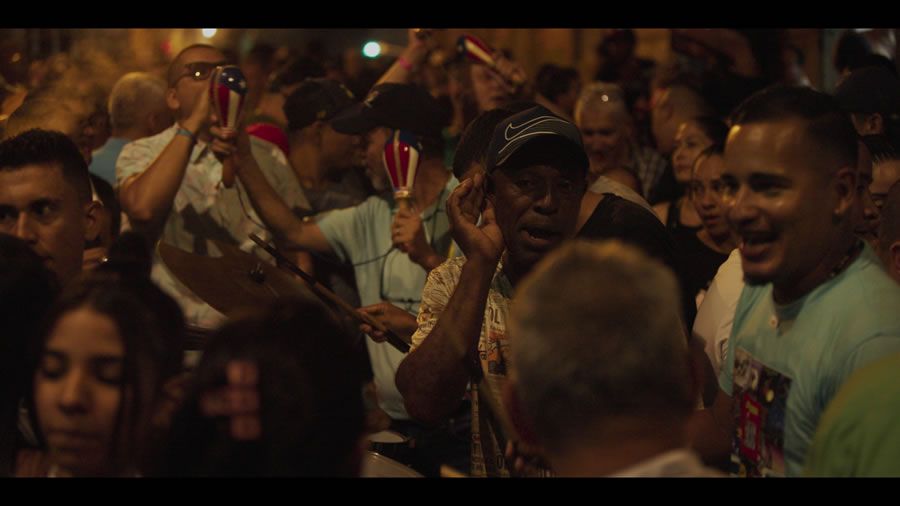
Thus, "La Salsa Vive" managed to transform into a film that tells the story of two cities strongly united by this rhythm, delving into the lives of various characters from Cali who have fervently kept the genre's flame alive, showcasing a diverse range of actors like collectors, experts, resilient veterans, dancers, and enthusiasts, along with the participation of legends like Rubén Blades, Henry Fiol, and Willie Rosario.
With these cities as protagonists, Juan Carvajal structured the story to be told in parallel. "There's one city that saw salsa born and saw it leave, and another that welcomed it. The movie goes through time; from its genesis to this moment, with an ending that pays homage to Cali in a very beautiful way. The last thirty minutes of the film are this city and its splendor, in that chaos, in that anarchic Cali that exists and keeps salsa alive through separate islands, which do not fully realize what they hold in their hands."
Great Songs Also Present
Talking about music presents a huge challenge because it immediately implies an increase in budget due to copyrights. As a true salsa fan, the director was not only able to count on Harlow's support but also from other salsa heavyweights who offered tracks for this film. "I am fortunate to have the friendship of Rubén Blades, who gave me two songs; I also have a great friendship with Henry Fiol, and his music is present, along with the 'Dandy' (Johnny Rodríguez), who passed away last year. But they are not the only ones; there are more characters and music that hit the city in the sixties and seventies. There are many stories told without music because of the copyright issues, since they are very costly. It's true that we've paid a lot for them, but there were also tracks that came to us generously. Without that help from artist friends, the documentary wouldn't have had the visual and auditory power it has." Juan has cultivated a strong friendship with Rubén Blades, with whom he is currently writing the script for what will be his first fiction feature film.
A Personal Documentary
Although Carvajal admits that making this film has been costly and has involved many sacrifices, he feels satisfied with the result, where he talks about others but also about himself, not only because of two cities he loves and a musical genre he is passionate about, but because they reflect his life, childhood, adolescence, and relationship with his parents, using an alter ego whose origin can be discovered by watching the film. "I also wanted to tell a story where my childhood was portrayed, my childhood memories. That house where I grew up is there; I fictionalized it, but it's there, just like my parents are, the 'aguaelulos' (a traditional Cali party from the past, in homes without alcohol consumption), and the quota parties we used to have. In 'La Salsa Vive,' my entire childhood and adolescence are recreated through an alter ego named Gary Domínguez. There's my past, my journey, and my life in New York in search of salsa."
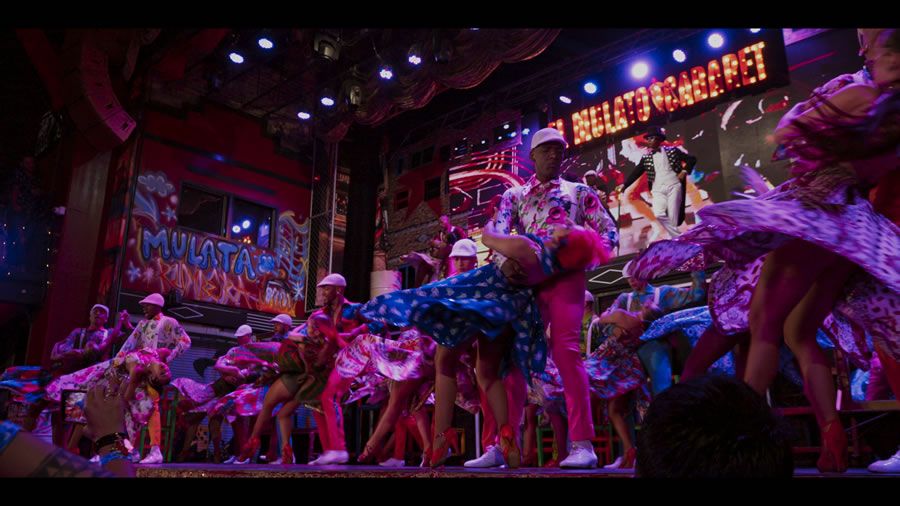
One wouldn't imagine that a film of this nature could be told by someone who does not live and breathe this sticky rhythm imprinted in the DNA of Caleños, and I think again of Andrés Caicedo and "Viva la música" when Juan talks about the commitment and viscerality with which his documentary is made: "The third act is very personal. In that third act, chaos reigns. This Cali is portrayed there, like my guts and my being. I am very visceral, and that viscerality is there; whoever watches it will experience it in that way."
Finally, Carvajal expressed to CineVista his excitement about the film's selection for a festival like the one in Texas, assuring us that, for him, American festivals are very important and it's cool that the work is recognized with such selections. It is expected that the film will continue its festival run before its arrival in Colombian cinemas, currently scheduled for May 29. Meanwhile, its premiere in New York at Carnegie Hall on April 30 has been confirmed, as part of their "Nuestros sonidos" program, which will include a live salsa concert at the end of the screening.
Juan Carvajal edited the film in Colombia first with María Clara Guzmán and then with Jorge Reyes. "La Salsa Vive" will have a total of four screenings at the SXSW Festival, which will take place from March 7 to March 15; two on March 7, one on March 8, and the last on March 14.
<< Go to Spanish version