
02/17/2025
Review Conclave - The Secrets Behind the Papal Election
By Sandra M Ríos U
X: @sandritamrios
Review “Conclave”: The Secrets Behind the Papal Election | This political thriller offers a critical look at the power structures within the Catholic Church. With constant tension and stellar performances, the film concludes with a reflection on power, morality, and faith.
Since 2009, when Sönke Wortmann released Die Päpstin (The Pope), there hadn’t been a fascinating fictional film exploring the secrets, legends, intricacies, and dilemmas surrounding the Catholic Church. The German film brought to the screen the myth of the alleged Pope Joan, who supposedly ascended to the throne disguised as a man in 13th-century medieval Europe. Conclave, also adapting a novel by Robert Harris, revisits the theme of the prohibition of female priesthood and papacy with the election of an intersex pope. However, Conclave doesn’t just focus on the ever-problematic role of women—especially in positions of higher authority—but also on faith, doubt, and political intrigue.
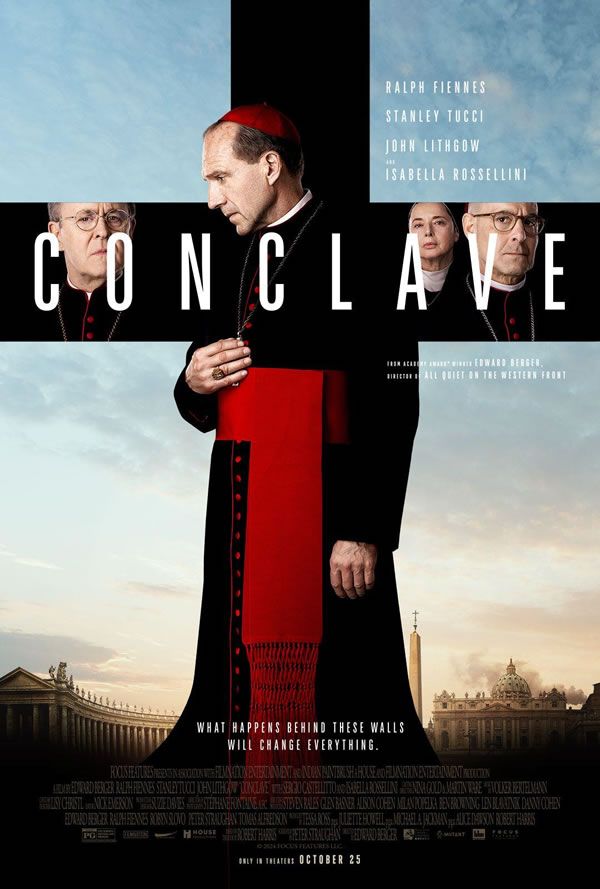
The pope has died, lying on his deathbed, and from the first moment, a protocol is activated, followed to the letter through a series of ceremonial steps and rites. It begins with the pope’s personal physician certifying his death and the camerlengo carrying out the initial procedures. These opening minutes are depicted in the film, revealing the minute yet significant details behind this lengthy process that culminates in the election of a new pope during what is known as the conclave—the ultra-secret meeting of the world’s eligible cardinals to choose his successor.
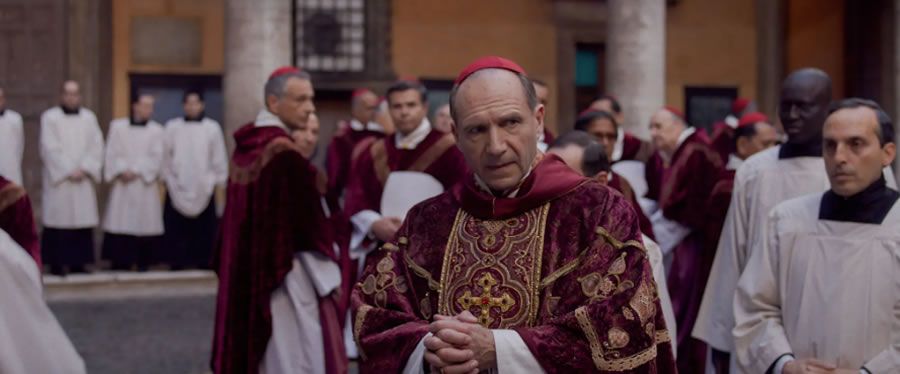
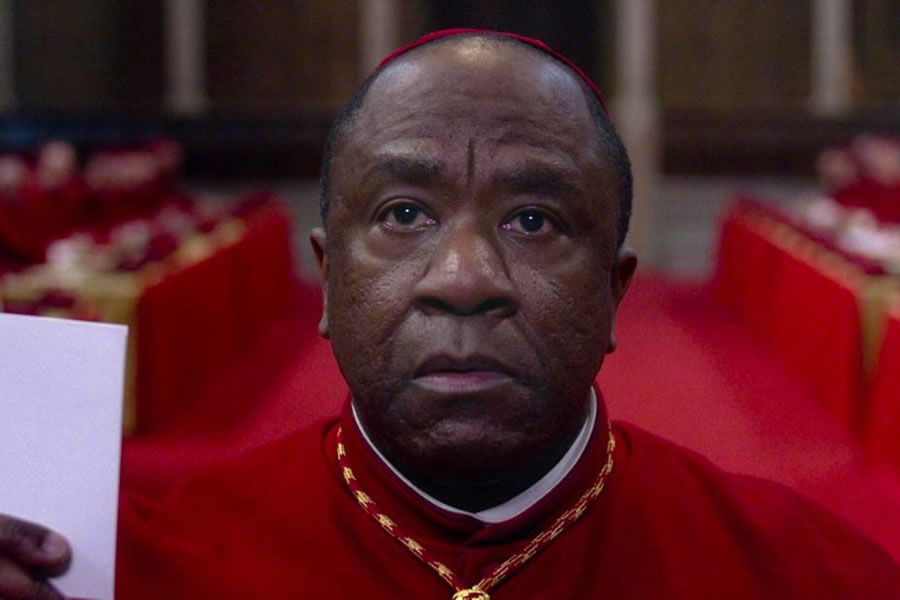
The film centers on this gathering, where Cardinal Thomas Lawrence (Ralph Fiennes), a liberal Brit, is appointed to oversee the election as dean of the College of Cardinals. He is chosen for his reputation as a respected and upright man capable of navigating the challenges of the process. As soon as the first vote is cast and black smoke emerges, the jockeying begins over the direction the Catholic Church should take. There are the moderates, represented by a Canadian cardinal (Joseph Tremblay); the liberals, embodied by the American Aldo Bellini (Stanley Tucci); and the more orthodox faction, led by a highly popular Nigerian candidate (Cardinal Joshua Adeyemi). Added to the mix is an unexpected contender, recommended by the recently deceased pope: a Mexican archbishop, unknown to most, who works in Afghanistan. The stage is set with this group.
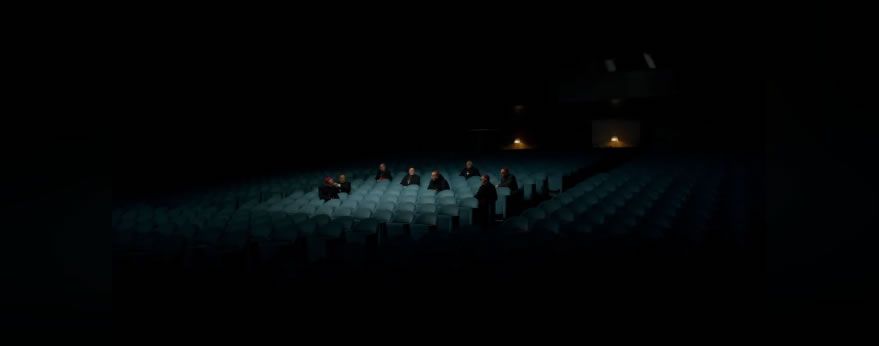
Edward Berger, the director of this adaptation of Robert Harris’s novel of the same name, confessed that he drew inspiration from Alan J. Pakula’s political thrillers to craft a plot that mirrors the paranoia, conspiracies, and dirty tactics that unfold among political rivals vying for power. The landscape Conclave gradually reveals inevitably invites comparisons to contemporary politics and even to the campaigns of Oscar-nominated films, which grow increasingly indistinguishable.
As dark secrets and questionable pasts of the cardinals come to light, Berger shifts away from the religious and focuses on ecclesiastical politics, which, in this view, differ little from traditional politics. This perspective draws clear parallels to the real world and to The Parallax View (1974) in terms of the climate of distrust woven among the candidates and how attempts at manipulation undermine the election. Likewise, it echoes All the President’s Men (1976) by highlighting how the ambition for power can corrupt even institutions of this kind.
Filmed and edited with meticulous and analytical precision, and featuring outstanding performances, this fictional story—blending realities and fantasies—broadly presents the range of scandals that have placed the Catholic Church under scrutiny (financial mismanagement, wealth concentration, pedophilia, secret sexual lives). It questions the Church’s moral ambiguity and levels of control, leaving a lingering sense that “anything goes” and discredit can also slip through the heavenly gates. This has prompted rebuttals from the Church’s foundations and experts on the subject regarding how a conclave truly unfolds and the relationships between cardinals.
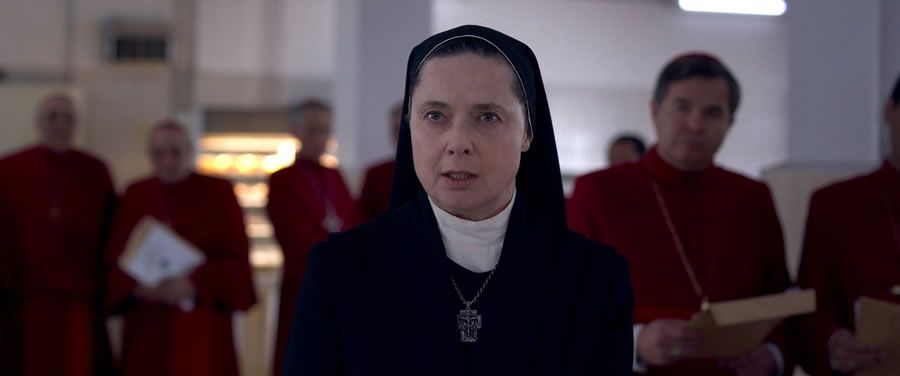
The pivotal role played by a nun in the story’s progression and the surprising twist in its conclusion reinforce one of the greatest challenges the Church faces in modern times—its future and its ability to sustain spiritual leadership. With unrelenting tension, Conclave concludes with a compelling reflection on power, morality, and faith in an increasingly secularized world.

Conclave is a highly enjoyable political thriller that, through suspense and drama, offers a critical look at the power structures within a church with over 1.36 billion faithful worldwide.
Good Doesn’t Equal Outstanding
Undoubtedly, Conclave is a strong feature film with excellent direction, impressive production design, effects (it wasn’t filmed in Rome, yet it feels like it throughout), and a talented cast. Like Emilia Pérez, Nosferatu, Dune: Part Two, and Wicked, it’s surprising that it’s among the favorites of this awards season. This brings us back to the debate that “good” is not synonymous with “outstanding,” and only what meets the latter standard should earn a place on the prestigious podium of the year’s best.
Technical Details
- Director: Edward Berger
- Runtime: 120 minutes
- Genre: Thriller
- Screenplay: Peter Straughan
- Producers: Tessa Ross, Juliette Howell, Alice Dawson, Michael Jackman, Robert Harris
- Cast: Ralph Fiennes, Stanley Tucci, John Lithgow, Isabella Rossellini, Sergio Castellitto
- Editing: Nick Emerson
- Music: Volker Bertelmann
- Cinematography: Stéphane Fontaine
- Country: United Kingdom, United States
- Year: 2024
<< Go to Spanish version