
03/13/2025
Review of Mickey 17 - The Fight for Freedom in a Space Dystopia
By Sandra M. Ríos U
X: @sandritamrios
Review of Mickey 17: The Fight for Freedom in a Space Dystopia | The new film from the historic Oscar-winning director Bong Joon-ho is a science fiction tale about cloning and the struggle for humanity, in a story that’s uneven but visually stunning.
The 350-page science fiction novel Mickey 7 by Edward Ashton was condensed by Bong Joon-ho into a 120-page screenplay, bringing to the big screen the story of a worker on a space mission who loses all his rights for the sake of the rest of humanity, sent to colonize a planet four years away from Earth.
Tagged as a “disposable” man, he is destined to have his body die repeatedly, subjected to tough and dangerous tests, while being replaced by an identical clone into whom his memories are inserted, more or less intact.
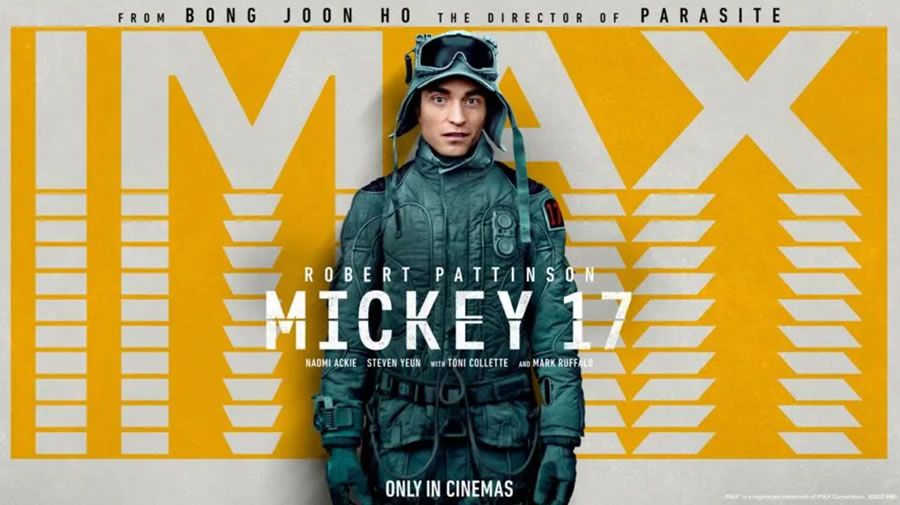
Six years after the Oscar-winning Parasite and four delays due to the SAG-AFTRA and WGA strikes in 2023, among other setbacks, it was a challenge to see a new film from Bong Joon-ho. This is his fourth science fiction work after The Host (2006), Snowpiercer (2013), and Okja (2017), returning to themes that have defined his filmography: social inequality, class struggle, family, human connections, and survival.
Earth hasn’t been completely destroyed, but it’s a world of extremely harsh conditions, to the point that its inhabitants seek to relocate to another planet. The year is 2054, and Mickey Barnes is one of them, having faced financial ruin alongside his friend Timo after their pasta restaurant failed. Hunted down by a ruthless loan shark, they decide to enlist as part of the crew of a spaceship tasked with colonizing the planet Niflheim. Timo is chosen as a pilot, while Mickey is designated as a “disposable”—a man handed over to serve as an experiment to ensure human survival in the new world.
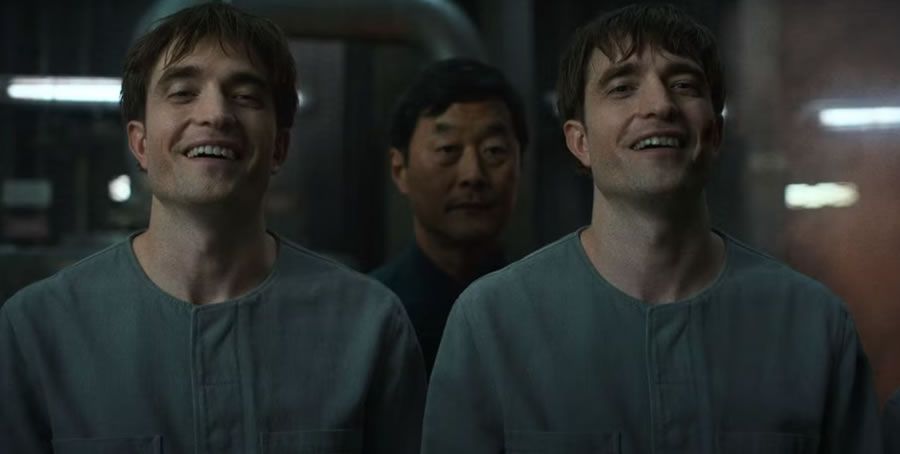
The contract includes the use of technology banned on Earth: cloning the disposable as many times as necessary. When the body dies, the memory is retrieved almost intact. Cloning is now reserved solely for this type of “soldier,” with a couple of unbreakable rules: only one disposable can travel per ship or planet, and two copies can never exist at the same time.
Arriving at the icy new habitat four years later, Mickey has already been replicated 17 times, giving the film its title. These repetitions have enabled the development of a vaccine against the planet’s pathogens, so now he’s assigned the mission of capturing a “creeper”—the name given to the lifeforms inhabiting the planet. During his search, he falls into a crevasse and is presumed dead. The scientists then print Mickey 18—who “awakens” potentially more selfish and aggressive—unaware that the creepers save him, allowing him to return to the ship.
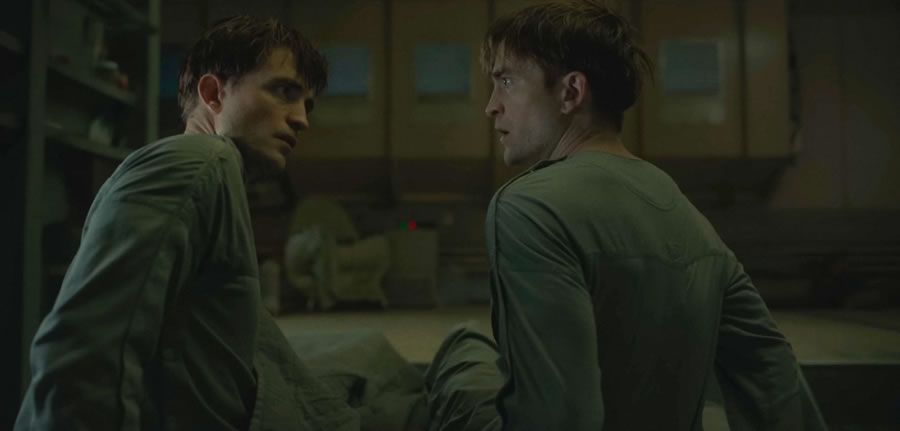
The existence of two versions sparks conflict, not only due to the colony’s established rules but also for the Mickeys themselves, who must compete to survive. This gives Mickey 17 the opportunity to break free from his futuristic slavery, fight for his freedom, and reclaim his sense of humanity—a struggle that becomes collective as the community clashes with the expedition’s political leader and the threat he has unleashed with the creepers due to his ambition.
With Mickey 17, Bong Joon-ho delivers his most ambitious sci-fi proposal yet, brimming with intrigue and a certain ambiguity, while showcasing a conceptually and visually overwhelming spectacle. It reaffirms his remarkable ability to navigate genres—a skill he’s often asked about and claims he isn’t consciously aware of achieving.
I’m not entirely convinced by the choice of Robert Pattinson as the protagonist of this story that leaps from drama to tragedy, intrigue, and dark humor—a lot for an actor to carry effectively to reach its full potential. That said, there are moments where he delivers a performance oscillating between emotional opacity and restrained stoicism, defining his character. It must also be admitted that his story is what keeps the film anchored to the essence of this director as an auteur.
The premise of Mickey 17 serves as a platform for a satire (which could have been sharper, admittedly) that Joon-ho excels at, targeting tech empires and highlighting how dangerous their unchecked colonizing desires, limitless expansion, and thirst for control can be. It also critiques politicians and their habitual practices of selling fantastical intergalactic dreams—in this case, while rights and individual freedoms are lost, and both humans and aliens are relegated to the status of lesser beings.
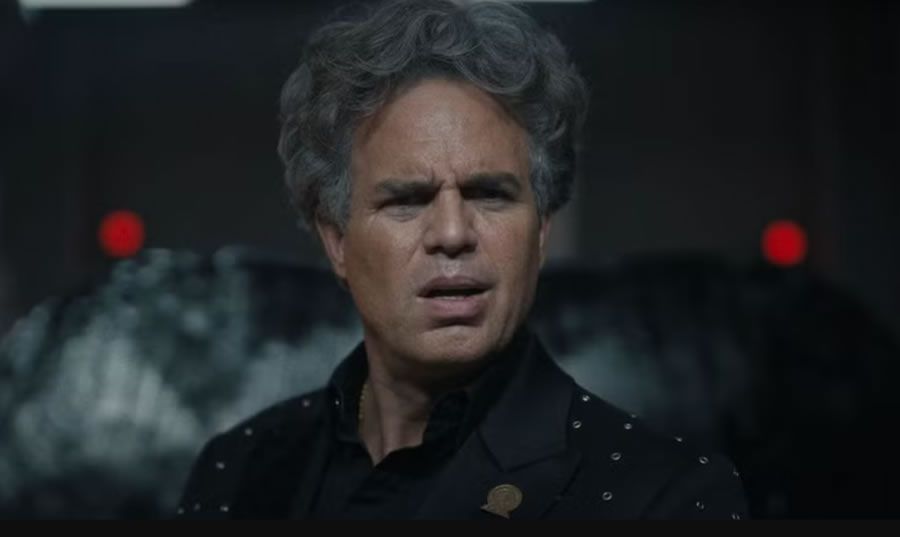
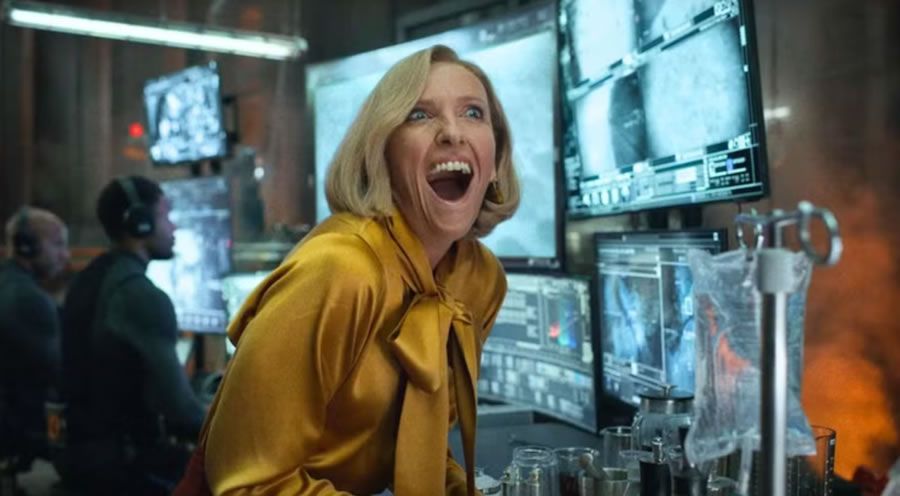
It’s typical for this director to work with large ensembles, which poses a narrative and tonal risk that takes a toll in this film. While the story maintains its dystopian, emotional, reflective, somewhat dark, and socially and politically critical strength with Mickey, his best friend, and his love interest, the characters of Mark Ruffalo (Commander Marshall) and his partner Ylafa (Toni Collette) bring a lightness and comedy that borders on the ridiculous. This indulgence, worthy of big-studio cinema, overstays its welcome, diluting the tension and power of the film’s message. These characters introduce the most eccentric elements, aligning the film more with Okja and Snowpiercer than the formality of Parasite. It’s tough to say given who these actors are, but for the purposes of this story, they feel almost expendable. In this sense, the film splits, seemingly torn between commercial demands and the interests of an auteur fond of sharp critiques, irony, and empathy for the marginalized.
Mickey 17 is an uneven film that shines more visually than narratively, despite its attempts to break conventions with a more hopeful message than most dystopias. Though adorned with plenty of levity, Bong Joon-ho uses this story to issue another resonant call that hits home in our reality—a time when the synthetic threatens to test humanity, given the rise of AI in our daily lives.
Technical Details
- Director: Bong Joon-ho
- Screenplay: Bong Joon-ho
- Runtime: 137 minutes
- Genre: Science fiction, satire, dystopia
- Produced by: Dede Gardner, Jeremy Kleiner, Bong Joon-ho, Dooho Choi
- Cast: Robert Pattinson, Naomi Ackie, Steven Yeun, Toni Collette, Mark Ruffalo
- Cinematography: Darius Khondji
- Editing: Yang Jin-mo
- Music: Jung Jae-il
- Country: United States, South Korea
- Year: 2025
<< Go to Spanish version