
11/12/2024
We Will Not Be Moved, Mexican Comedy Opening FICCALI
"We Will Not Be Moved" is the Mexican film that opens FICCALI 2024 today. The black-and-white feature film, which is also the directorial debut of Pierre Saint-Martin Castellanos, uses comedy to revisit a tragic event in order to speak about peace.
From today until November 17, the 16th edition of the International Film Festival of Cali will take place, with a new artistic direction.
"We Will Not Be Moved" follows the story of Socorro, a woman over sixty who is a stubborn lawyer obsessed with finding the soldier who killed her brother during a massacre in 1968. This obsession has caused conflicts with her sister and son. After decades of searching, she finally gets a lead to track down the soldier, which leads her to devise a plan for revenge that risks not only her life but also that of her family and her property.
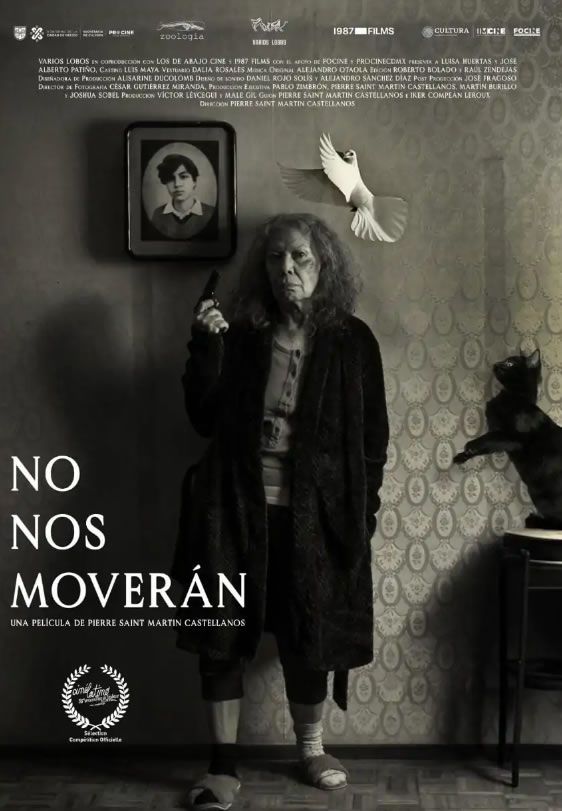
The story has personal roots for director Pierre Saint-Martin: “The origin of this story goes back to the memories and experiences of my mother regarding the mysterious death of my uncle Jorge during the autumn of 1968.” Told as a comedy, it is a story of reconciliation that resonates in a country like Colombia, which has also suffered from extreme violence. “We Will Not Be Moved is a story of revenge and forgiveness in a country historically thirsty for justice. It is also a tribute to my mother and other families who have lost someone to violence and have lost the path to peace.”
Alejandro Martín, the current artistic director of FICCALI, emphasizes the film's story, message, and narrative: “We Will Not Be Moved is a film that raises the question of the possibility of justice in our Latin American countries in a way that clearly shows all the difficulties, contradictions, and ironies that mark us.”

Martín also highlights for CineVista key elements in his choice of the film as the opening feature, given its closeness to the February 26, 1971 massacre and recent events in the city. “The film establishes a close dialogue with Cali, as what happened in Mexico in 1968 has many common threads with what occurred in Cali in 1971. A major sporting event and a large urban transformation collided with significant social conflict, where student movements were harshly repressed by the police. And that situation has a strong echo with what we experienced during the national strike.”
Finally, Alejandro highlights more details of this debut feature, which has the virtue of resonating with a wide audience. “We Will Not Be Moved has very careful cinematography, where Luisa Huertas carries the film on her shoulders, conveying everything that her character is experiencing at every moment. It is important to point out how this feature seeks to reach a wide audience, which was confirmed by winning the Audience Award at the Toulouse and Guadalajara Film Festivals.”
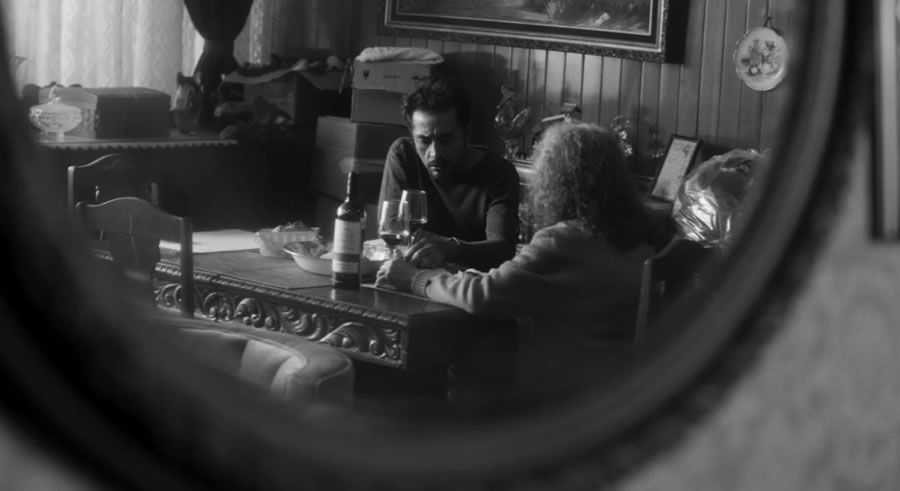
Starring Luisa Huertas as Socorro, Rebeca Manríquez (Esperanza), and Pedro Hernández (Jorge), the film emerged as the biggest winner this year at the Guadalajara Film Festival, taking home the Mezcal Award for Best Mexican Film and the Audience Award.
Upon receiving these awards, leading actress Luisa Huertas stated that the film was made to never forget October 2. “I think one of the nicest things that happened to us here at the festival was hearing a young person say that ‘We Will Not Be Moved’ had moved them. That’s what it’s about. As Pierre said, but I want to repeat it. I know it will sound like a pamphlet, something we fought for in making the film, but October 2 will never be forgotten. What we seek with the film is peace for the country.” The director, for his part, emphasized that Huertas was the true "soul and heart" of the film and insisted that this is a story about redemption and forgiveness, something he believes we all need to practice.
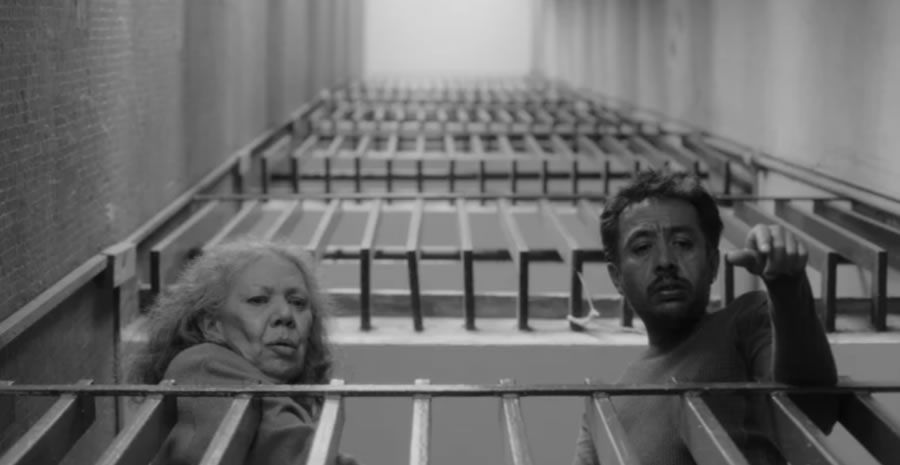
It’s worth noting that Luisa is one of the most important actresses in Mexican cinema. She debuted in the 1960s and has credits in more than 70 films, with a variety of titles including Love Lies, The Beginning and the End, Blue Eyelids, Kilometer 31, The Turns of the Heart, and the Colombian film Two Women and a Cow.
Context
The Tlatelolco Massacre
Students and protesters gathered in the Plaza de las Tres Culturas in Tlatelolco on October 2, 1968, for a peaceful protest against government repression. Military and federal police forces arrived and opened fire indiscriminately on the protesters, officially leaving at least 300 dead.
The events occurred during the presidency of Gustavo Díaz Ordaz, whose government tried to conceal the true scale of the massacre, blaming the students and refusing to investigate and clarify the events.
The February 26, 1971 Massacre in Cali
This event occurred amidst a strike and protest by workers and students against the government of President Misael Pastrana Borrero at the University of Valle. Military and national police forces violently broke up the peaceful demonstration, opening fire, with estimates of between 13 and 20 deaths, dozens more wounded, and thousands of arrests. The goal was to regain control of the university.
This massacre led to more protests across the country and caused both public and private universities to go on strike. These events later formed the basis for a program that restructured the university system.
This year, the International Film Festival of Cali features 123 films, including 49 works directed by women, 55 by men in the official selection, 18 international guests, 29 national films, 10 children’s screenings, 38 academic activities, and 5 inclusive film screenings for people with hearing and visual impairments, among others.
<< Go to Spanish version