
01/13/2025
Wolf Man (2025) - Leigh Whannell`s Return to Horror Cinema
Wolf Man: Leigh Whannell's Return to Horror Cinema. The director of The Invisible Man reinvents the 1941 classic with a story about transformation and family drama.
Since 2020, Australian director Leigh Whannell had not directed a film, when he released "The Invisible Man," his brilliant adaptation of H.G. Wells' novel. Now, on January 17, he returns with "Wolf Man," a reboot of the 1941 gothic classic directed by George Waggner.
Reluctant to engage in another film adaptation and be pigeonholed in the same genre, Leigh accepted the project when he discovered the possibilities light and sound offered to convey the idea of transformation of this iconic character.
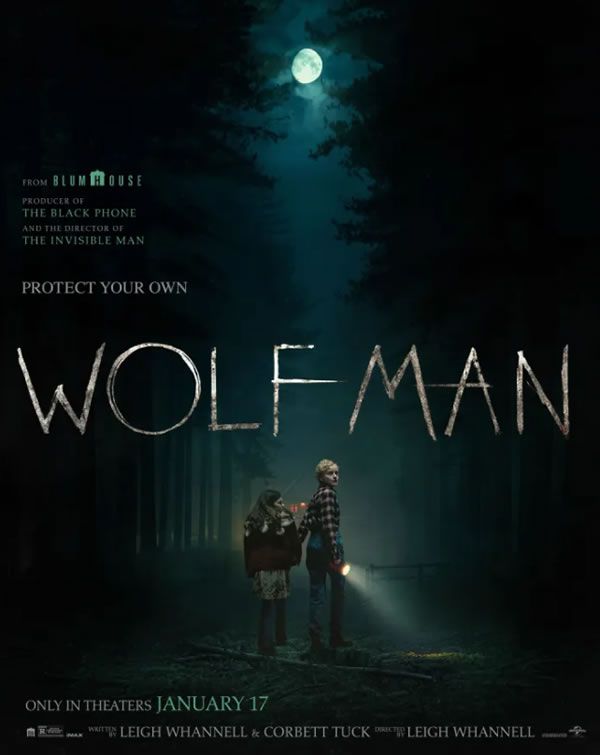
With the Hollywood premiere canceled due to the devastating fires that started in the Santa Monica mountains on January 7, this story follows the Lovell family, consisting of Blake, Charlotte, and their daughter Ginger, who move to Blake's childhood rural home in Oregon following his father's death. Deep in the woods, he is attacked by an unknown creature, further isolating them and questioning his protective role.
As those who have followed this director's career know, he was the screenwriter for the first three installments of the "Saw" franchise, and there is an intentional nod to this film in "Wolf Man," which international media now discuss as a prelude to its release. The scene involves a bear trap, reminiscent of the memorable and sinister inverted bear trap Amanda Young was subjected to in the first "Saw" movie (2004). "I love it when a production is imbued with recurring themes in an artist's work. If you look at someone like Tarantino, Scorsese, or David Fincher, you start to see certain recurring things in their work, objects or ways of filming things. As a cinephile, I'm always looking for that. When it comes to my own films, I think about the audience and these little nods to other things I've done." Thus, Whannell confirmed the existence of this reference to his cinematic debut.
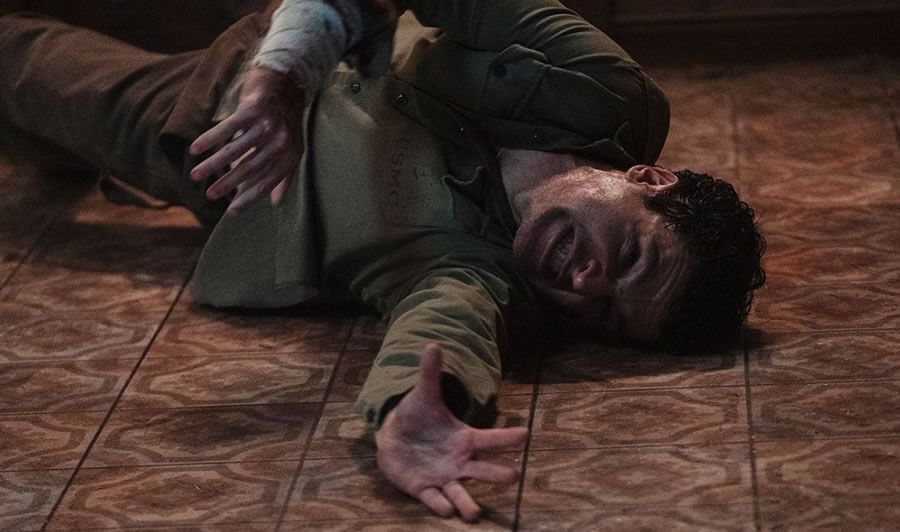
Actors Christopher Abbott (Sanctuary, Possessor) and Julia Garner (The Royal Hotel, Apartment 7A) are tasked with bringing this story to life, where Leigh wanted to balance the family drama of a father not wanting to hurt his family with his animal instincts.
Another reference the filmmaker used for this story is "The Fly," one of his favorite body horror films, where David Cronenberg gave a more modern and dramatic vision which Leigh wanted to emulate, showing the struggle with bodily degradation, mortality, and loss of humanity, while in the romantic aspects, these stories speak of love, loyalty, and loss. "The Fly was definitely a guiding star for me while making this film," he told Dexerto.
If "The Fly" served as a metaphor for degenerative diseases or the slow, abrupt, and inevitable process of aging, "Wolf Man" also takes this approach. During the scriptwriting, the director drew inspiration from a friend whose illness progressively confined him to a wheelchair and prevented him from communicating. "All my emotions around this went into the script, and there's no way to avoid the sadness it evokes. A film like 'The Fly' illustrates that both elements, horror and tragedy, can work together."
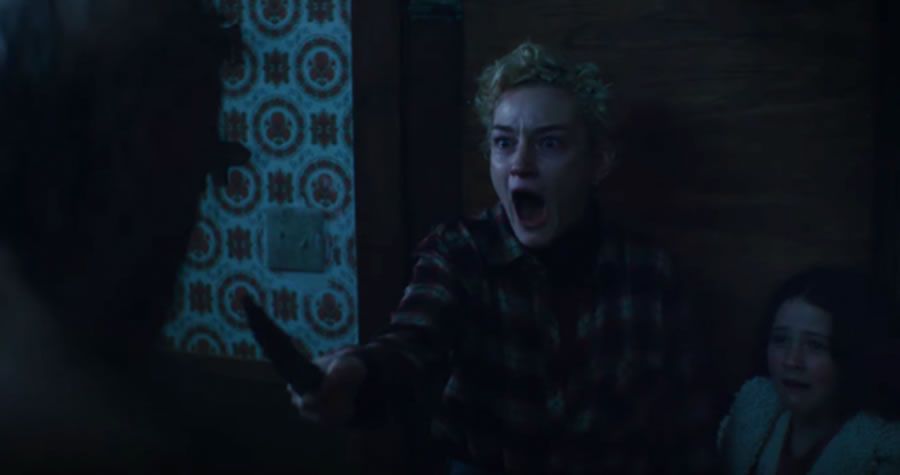
The initial reactions to the film suggest it's a good reboot, a true horror movie, with its nods included. As stated by presenter and producer Benjamin Watts, it's a "raw and intimidating" vision where Leigh Whannell "creates a storm of pain and ferocity, echoing the dark elegance of The Invisible Man. If that movie resonated with you, this one will leave its mark with the same depth."
The Werewolf or Lycanthrope in Literature and Cinema
The version of the werewolf or lycanthrope introduced by Guy Endore with "The Werewolf of Paris" in 1933 has been one of the most influential works for this gothic character, blending supernatural horror with social and historical commentary, which has continued to serve as a structural model in both literature and cinema.
Both arts have preserved aspects of the character's nature like duality, the violence or darkness within us all, the internal struggle between humanity and beastliness, identity, and physical and mental transformation. It was cinema, specifically with the 1941 film, that introduced the connection with the full moon and vulnerability to silver.
<< Go to Spanish version