
03/17/2025
First Colombian Film Showcase in Alicante - Train to the South
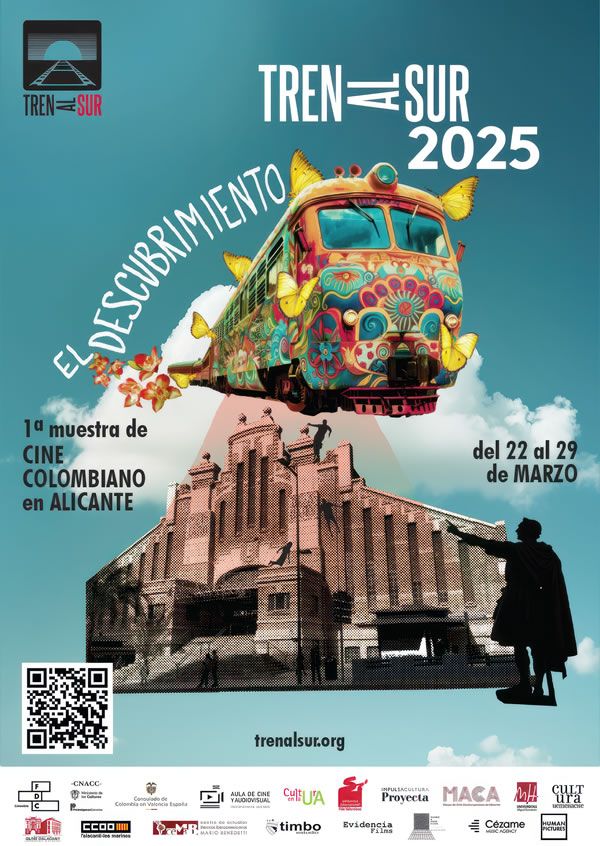
The First Colombian Film Showcase in Alicante, Train to the South, features 10 films, half of which are directed by women. Made possible through collective support, including crowdfunding, it includes documentaries, fiction films, features, and shorts that address themes such as migration, identity, and conflict. Free screenings will take place from March 22 to 29, with in-person and virtual discussions.
Next weekend marks the start of the First Colombian Film Showcase in Alicante, Spain. The lineup will include 10 films, half of them directed by women.
Opening Film
The event kicks off on Saturday, March 22, with the documentary Del otro lado (On the Other Side) by Iván Guarnizo, which intimately, reflectively, and reconciliatorily recounts the tragedy his family endured after his mother’s 603-day kidnapping. What began as an Easter trip in 2004 to Puerto Inírida to visit a cousin’s brother turned into a nightmare for the Guarnizo Echeverry family when the mother, Doña Beatriz Echeverry, was abducted along with her cousin by the FARC guerrilla group.
Those 603 endless days altered the family’s daily life, fracturing them but also uniting them, leaving them with a profound lesson from the primary victim of the torment of lost freedom: their mother. Due to illness, she did not live to see the historic signing of the Peace Agreement with this armed group—an event that inspired this documentary.
With around 21,000 Colombian residents in Alicante, Train to the South offers a great opportunity to engage with the cinematography of the coffee-growing nation and its diversity, while also providing all local residents with an alternative to the usual cinema offerings.
The Lineup
The program continues with Ana Rosa (March 25), which recently won the Best Feature Film award at Spain’s Brain Film Festival. This extraordinary documentary, directed by Catalina Villar, uncovers a family secret and delves into an investigation of the psychiatric practice known as lobotomy—initially sold as a miraculous cure for severe mental disorders and performed in Colombia between 1940 and 1960. By unveiling a series of secrets, the film transcends the personal to address the collective, highlighting the trend of this gruesome neurosurgical procedure targeting women.
On March 26, Igualada will be screened, a documentary directed by Juan Mejía Botero that traces the journey of Colombia’s Vice President Francia Márquez. It follows her path as a rural Afro-Colombian activist to her historic campaign, where she redefined the term “igualada”—once used derogatorily to describe someone claiming undeserved rights—into a symbol of struggle and hope.
March 27 features a short film and two features: Has estado aquí (You’ve Been Here) by Vivian Muñoz, a documentary short where, after a 20-year migration journey, the director faces her toughest period, watching her mother age from afar and realizing how dementia is erasing the few moments they shared in Barcelona and Bogotá.
Next is the documentary Mis dos voces (My Two Voices), a Canadian production by Colombian director Lina Rodríguez. It offers a poetic reflection on the fluid nature of identity through Ana, Claudia, and Marinela—three women of Latin American descent who migrated to Canada and discuss violence, motherhood, and reconciliation. Their reflections intertwine with public and private spaces, revealing the fragmented, hybrid identities of the protagonists.
The day concludes with My Way or The Highway, a documentary by Silvia Lorenzini that follows Giorgio, an inventor of amphibious devices, on a motorcycle journey from Colombia to southern Argentina with his daughter Silvia after 15 years apart, exploring their relationship, family memories, and the quest for reconnection.
On March 28, screenings begin with Imaginarios: El goce de lo simple (Imaginaries: The Joy of Simplicity), an experimental production using 2013 archival footage to revive the dreams of rural students in Guateque, Colombia. This short confronts those aspirations with the reality of a contemporary society shaped by technology and consumption.
The day ends with Gente de Bien (Good People), a celebrated work by Franco Lolli that paved his way as a director. This minimalist, realistic, and relatable story reveals class tensions and family dynamics through the eyes of a 10-year-old boy who moves in with his barely-known father and is integrated into the affluent family his father works for.
The showcase wraps up on March 29 with two standout films of contemporary Colombian cinema: Virus Tropical by Santiago Caicedo and La Bonga by Sebastián Rincón and Canela Reyes. Caicedo’s film is the first Colombian cinematic adaptation of a graphic novel—an autobiographical Colombian-Ecuadorian story where the protagonist narrates her childhood and adolescence between Quito and Cali.
The closing film, La Bonga, is a remarkable documentary offering a unique perspective on the wounds of displacement, highlighting a community’s resistance, adaptation to new territory, and pursuit of return. The story began with Sebastián Pinzón’s short film Palenque, co-directed with Canela Reyes for his thesis, where he met protagonist María de los Santos. She dreamed of seeing her people return to La Bonga, as she had, and revive the celebration of their patron saint. This feature wasn’t born from a desire to narrate a town’s disappearance but from the wish to fulfill her dream and document the journey—a return to roots and belonging.
All screenings are free with prior registration, and some will include in-person or virtual discussions.
With Collective Support and Crowdfunding
Train to the South is made possible through in-kind support from various organizations, including Colombia’s Ministry of Culture and the Colombian Consulate in Valencia, as well as the collaboration of filmmakers. The event has an ongoing crowdfunding campaign that has covered some expenses and aims to also recognize the volunteers involved.
<< Go to Spanish version