
02/28/2025
Gene Hackman, a titan of cinema, has passed away
Gene Hackman, a titan of cinema, has passed away. His death was announced yesterday under circumstances that have been deemed suspicious. "I want to be remembered as a decent actor," he said in one of the few interviews he gave after retiring from acting.
Gene Hackman has died. A cinematic legend has died. One of Hollywood's most chameleonic actors and a joker among his closest friends has died. At the age of 95, his passing has been reported under strange circumstances. His body was found alongside that of his wife, classical pianist Betsy Arakawa, and one of their dogs.
Born on January 30, 1930, in San Bernardino, California, Hackman was a cinematic titan whose career was pure Hollywood gold. His artistic beginnings were not driven by dreams of fame; in fact, his entry into acting came almost by accident, close to his 30s, when, after serving in the United States Marine Corps, he decided to pursue his passion for acting and enrolled in the training program at the Pasadena Playhouse in the late 1950s. This institution had been designated the "State Theatre of California" since the late 1930s due to its influence and contribution to the performing arts. It has trained professional actors such as Tyrone Power, Charles Bronson, Eleanor Parker, and Sally Struthers. It was during this time that he met another future famous actor, Dustin Hoffman, with whom he formed a lasting friendship. Ironically, both Hoffman and Hackman were labeled "unpromising"—a judgment that time would thoroughly disprove.
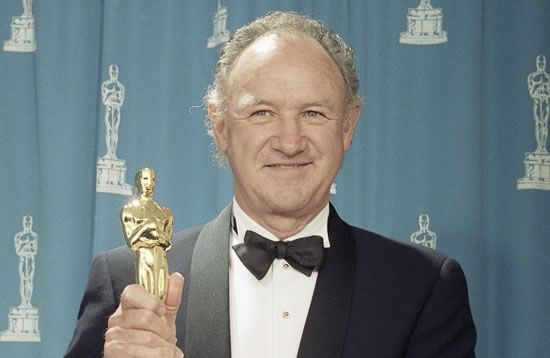
Following the news of his death and its unclear circumstances, Hoffman recalled how little faith was placed in their talent during their training days and compared Hackman to one of their idols. "I met Gene at acting school, at the Pasadena Playhouse, when he was 27 and I was 19. We used to play the congas together on the rooftop, trying to be like our hero, Marlon Brando. Gene was like Brando in the sense that he brought something unprecedented to our craft, something people didn’t immediately recognize as genius. He was expelled from our school after three months for ‘lacking talent.’ It was the first time they’d done something like that. He was that good. Powerful, subtle, brilliant. A giant among actors. I already miss him."
His first film appearance was an uncredited role in Mad Dog Call (1967), where he played a policeman, but his big break came with Bonnie and Clyde (1967), where his role as Buck Barrow earned him his first Oscar nomination. Gene Hackman’s performance was widely praised by critics and audiences alike, described as charismatic, energetic, and with a touch of vulnerability that added depth to the character. This role helped establish him as a versatile and talented actor, capable of balancing moments of humor with intense dramatic scenes. After appearing in his first six films, it was from this point onward that he solidified his position as one of Hollywood’s most respected figures.
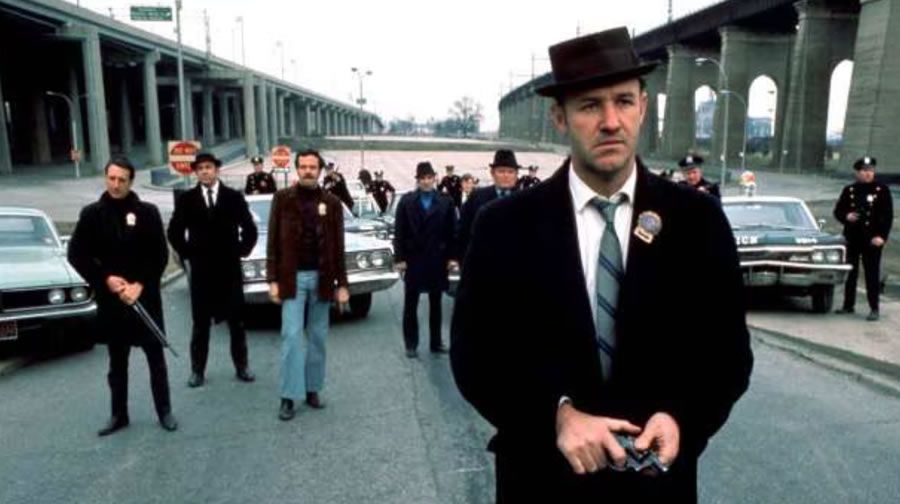
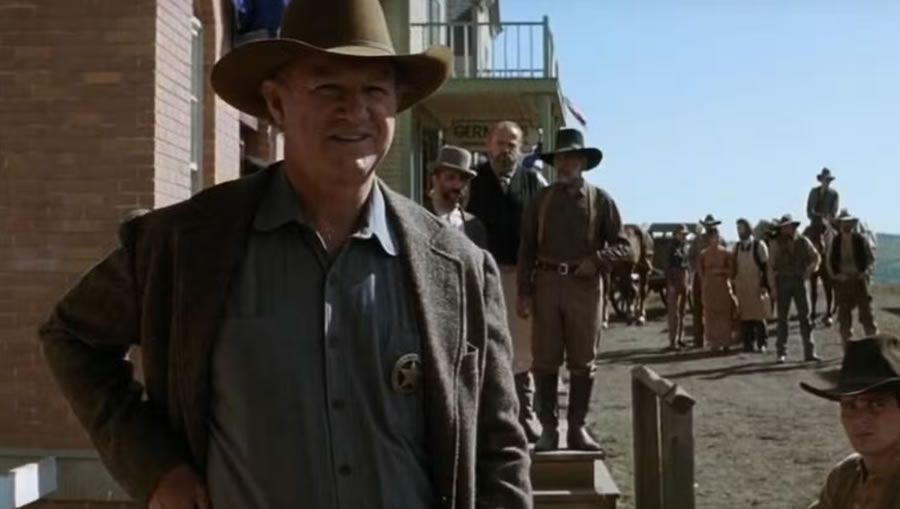
In 1971, with the unforgettable Popeye Doyle in The French Connection, he took home the Oscar and became a legend. And what about his Lex Luthor in Superman (1978)? Cunning, charming, and villainous, Hackman had it all. Then there’s Unforgiven (1992), where, as Sheriff Little Bill Daggett, he won another Oscar, proving he could be as feared as he was loved. With over 90 films in his filmography, Hackman dominated genres like no other: drama, action, comedy—whatever was thrown his way.
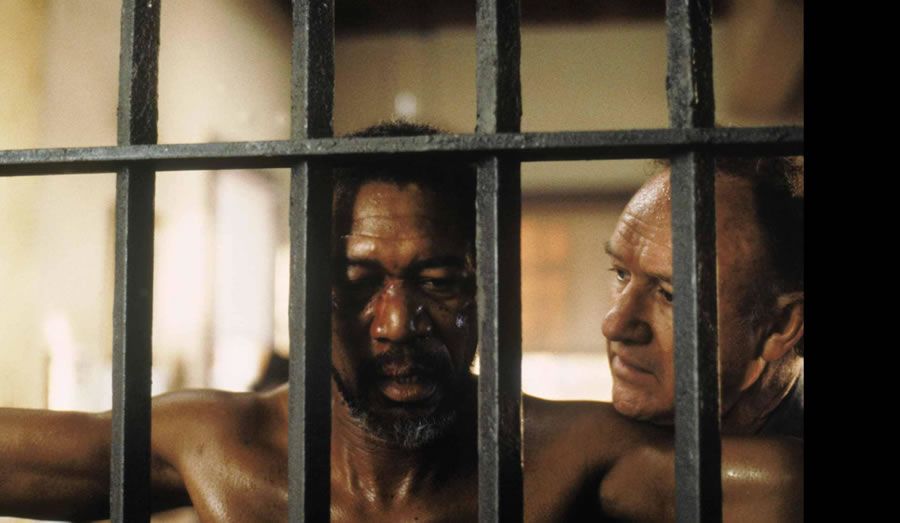
Gene Hackman maintained a reserved personality and shied away from the spotlight off-screen. His retirement from acting was never officially announced but became evident in 2004 after the release of his final film, Welcome to Mooseport. Since then, he had stayed out of the public eye, focusing on his personal life and writing historical novels. Trading the set for the pen, he published several novels, including Justice for None, co-written with Daniel Lenihan, with whom he also released Escape from Andersonville: A Novel of the Civil War (2008). His last solo novel, Pursuit, a police thriller about a sergeant pursuing a predator threatening to kidnap her daughter, was published in 2013.
The clearest record of his intent to retire came during an interview he gave in 2008 on The Late Late Show with Craig Ferguson. During the conversation, Hackman explained that he had no plans to return to acting, that he was satisfied with his career, didn’t want to make films just for the sake of it, and preferred to dedicate his time to writing and enjoying a quieter life. In another interview in 2011 with Empire magazine, the actor commented on his last film, Welcome to Mooseport, saying it hadn’t been a great experience and that, in retrospect, he felt it was a good point to step away. He also mentioned that once he started writing novels and painting, he found a new way to express himself creatively without the physical and emotional demands of acting.
Hackman also shared some details about his routine with his wife Betsy Arakawa, such as their habit of watching low-budget movies on Friday nights, noting that they both enjoyed "simple stories." He expressed that he didn’t miss acting or fame and preferred the creative freedom of writing novels, where he had greater control over his work without the pressures of Hollywood. In a reflective tone, he said he wanted to be remembered as "a decent actor" and hinted that he would only consider returning to acting if it were for a small project filmed in his own home with few people involved.
His thoughts on the Oscars
Regarding his iconic role in The French Connection (1971), Hackman once said it was a physically demanding role, especially due to scenes like the famous car chase. Hackman was Jimmy "Popeye" Doyle, a tenacious and obsessive detective. In interviews, he revealed that he felt insecure during filming due to the demands of director William Friedkin, who asked him to improvise and adopt a more aggressive tone—something that didn’t come naturally to him. Despite these insecurities, he acknowledged that the result was effective and that the Oscar was a significant recognition, though it didn’t change his view of himself as an actor.
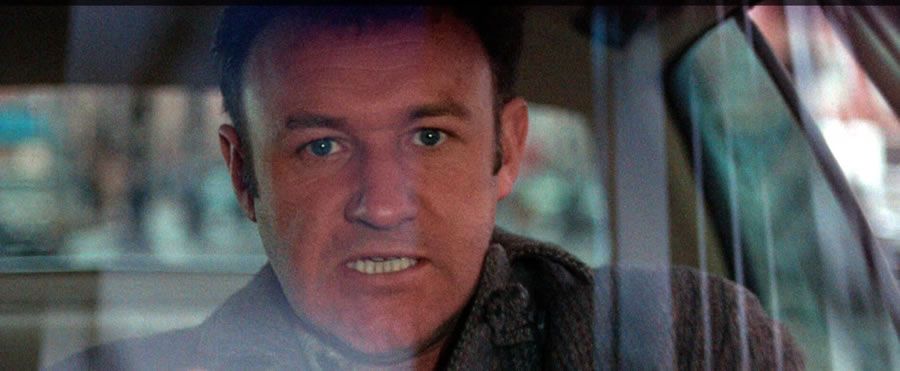
His second Oscar came in 1993 for Unforgiven, for his portrayal of Sheriff Little Bill Daggett, a complex and brutal villain in the Western directed by Clint Eastwood. Eastwood, via a brief message on X, expressed his sadness and shared an image from the set of the political thriller Absolute Power (1997). "I am deeply saddened by Gene Hackman’s passing. He will be profoundly missed." Hackman always highlighted the depth of David Webb Peoples’ script and Eastwood’s direction. In another conversation with Empire, he admitted he initially turned down the role for being too violent, but Eastwood persuaded him to accept it, and he saw his second Oscar as validation of his versatility.
It is expected that within no less than two weeks, the causes of his and his wife’s deaths at their home in Santa Fe, New Mexico, will be clarified. The world has truly lost a chameleonic actor.
<< Go to Spanish version