
03/27/2025
Netflix’s Adolescence Exposes the Dangerous Evolution of the Manosphere
By Sandra M Ríos U
X: @sandritamrios
Netflix’s “Adolescence” lays bare the dangerous evolution of the manosphere. | The miniseries, created and written by Jack Throne and Stephen Graham, reveals how the manosphere and incel forums radicalize young people. The cultural impact it has generated is already being felt in British politics, which is attempting to curb this type of violence.
“The incel rebellion has begun! We will take down all the Chads and Stacys!” said Alek Minassian, 25, on his Facebook account before driving a van into 10 people, including 8 women, and injuring 16 others. Sentenced to life in prison for the events of April 2018, this case led Canadian authorities to consider incels a serious ideological threat.
This young criminal also cited Elliot Rodger, idolized by the involuntary celibate (incel) community, as this group of men calls itself. They believe they are unable to form romantic or sexual relationships with women, despite desiring them, due to their physical appearance or societal standards.
Mr. Rodger, 22, killed six women and injured 14 others in an attack near the University of California. On his social media, he published a manifesto professing his hatred for women (Stacys) and attractive men (Chads). He proclaimed himself an incel. His case marked a turning point by bringing visibility to this subculture as a potential threat.
The rise in knife crimes and attacks committed by young English men following the pandemic served as the starting point for the creation of the fictional miniseries “Adolescence.” Since its release on Netflix on March 13, it has garnered 66 million views in two weeks, setting a historic record for the platform.
Who does this devastating drama focus on? The manosphere, a network of online communities where masculinity and gender issues are debated, often criticizing feminism and modern norms. The problem is that these groups have evolved into factions like incels, MGTOW (Men Going Their Own Way: men who avoid relationships with women), and PUAs (Pick-Up Artists: men who use manipulative seduction techniques), shifting from mutual support to resentment, bordering on misogyny and radicalization.
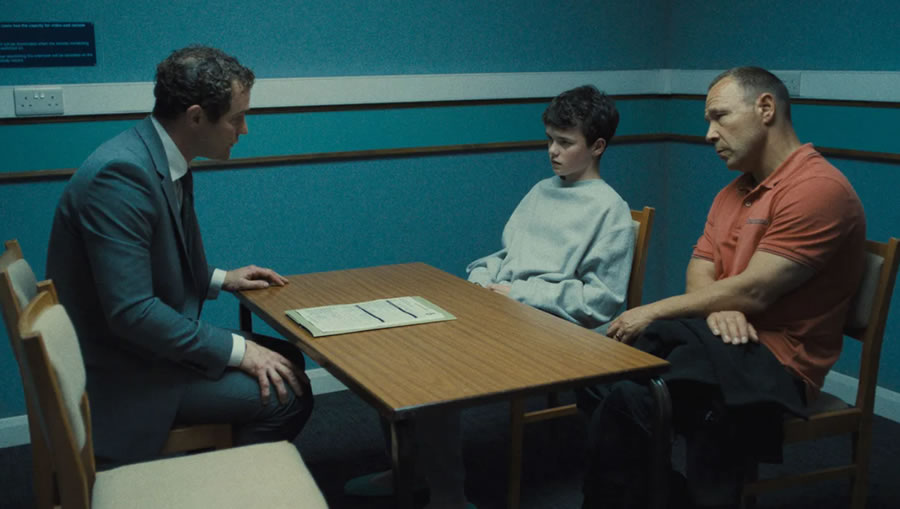
Using the demanding yet effective technique of single-shot sequences to film each of its four episodes, “Adolescence” immerses us, in its opening chapter, in the 60 minutes that forever changed the life of the Miller family. It begins at 6:15 a.m. with a heavy security operation bursting into their middle-class suburban home in England, waking them up. Terrified and unable to comprehend what’s happening, the target is the youngest member of the family, Jamie Eduard Miller, who must be taken into custody as a suspect in the murder of a minor.
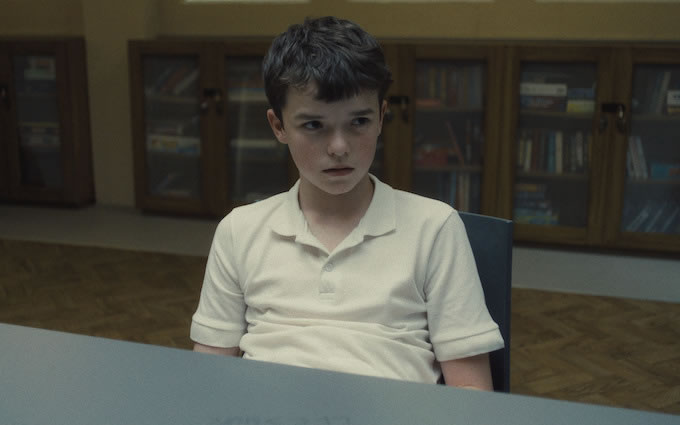
Amid the disbelief and the 13-year-old’s insistence that he “didn’t do anything wrong,” what follows is a series of legal procedures observed from three perspectives: that of the police officers handling the case, aware of the complications when a teenager is involved; that of the parents, watching their son subjected to technicalities, uncomfortable questions, and assessments; and that of the accused, dazed and helpless, as he is led to a cell awaiting initial contact and instructions from a public defender to face his first interrogation. There, the prosecution presents initial evidence that leaves little doubt about his responsibility.
With near-flawless choreography and a pulsating soundtrack that sets the pace for an opening chapter defined by shock, confusion, denial, and questions of “why,” “Adolescence” does not revisit that evidence or the night of Katie Leonard’s murder, his schoolmate. Nor does it dedicate space to the victim beyond community tributes and the chaos her loss unleashes. This omission might initially seem like a form of revictimizing women, but its commendable goal is to highlight the root of these attacks and the perpetuation of misogyny in society. This series isn’t one of those classic genre pieces where the aim is to piece together a puzzle to uncover the killer, reconstruct the case, and clarify how it happened.
In “Adolescence,” the crime is already all but solved, and what remains is an exploration of the perpetrator’s world to expose and denounce the complexity behind his actions: children and teens growing up frustrated with their socialization and romantic skills due to early overexposure to the internet and adult themes. Far from managing these appropriately, it distorts their minds and behaviors, leading to cases like this fictional story, which is an amalgamation of real events.
The Panic of Parents and Teachers Over Children and Teens
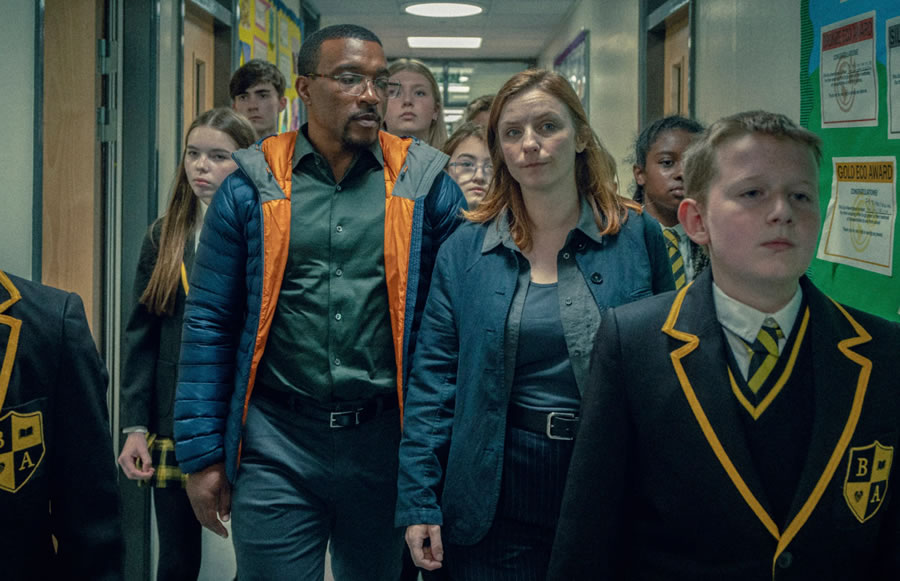
The second episode begins on day three of the nightmare this family is living, shifting focus to the school—teachers, students, and Miller’s close peers—a vital space for the story’s purpose. It’s not just about understanding what happened and who the victim was in broad strokes, but about raising the core issue of the series: reflection on family and the education system, where control over children and youth has been utterly lost.
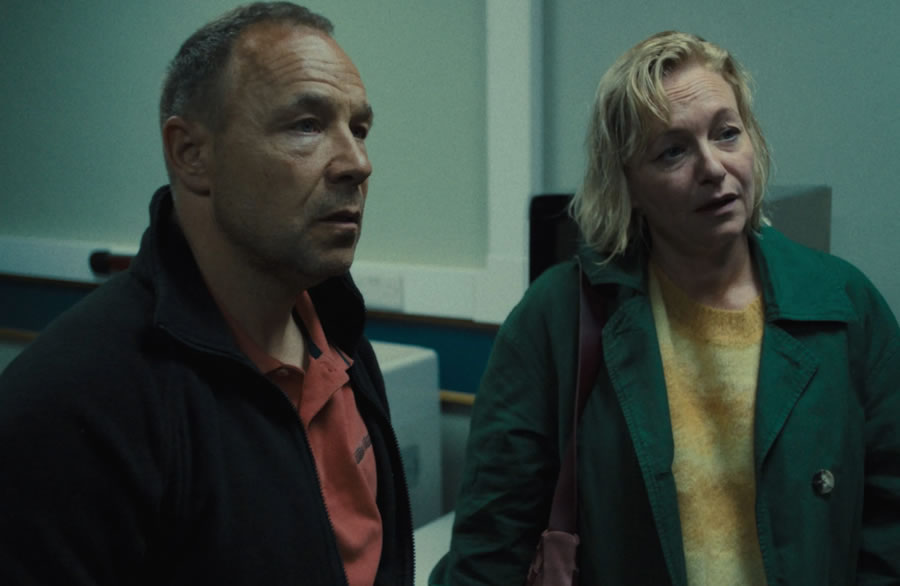
The tour through the school is depicted as a frantic and terrifying journey where chaos reigns (as one of the case’s officers points out): teens fighting, teachers shouting repeatedly for students to put away their phones, others resigned, students bullying each other and their educators—situations that far exceed the normal rebellion of these life stages. So much emphasis has been placed on protecting the “privacy” and “free development of personality” (incredible!) of the youngest that adults have lost access to their world, and thus their guidance, and therein lies the danger.
This society, which labels and sets standards for beauty, femininity, and masculinity, ignores the dynamics and codes of how new generations relate today. This is reflected in bewildered police officers still wondering what drove Miller to commit such a heinous crime, when for the students, the signs are obvious and plain to see (on social media).
Sociopathy
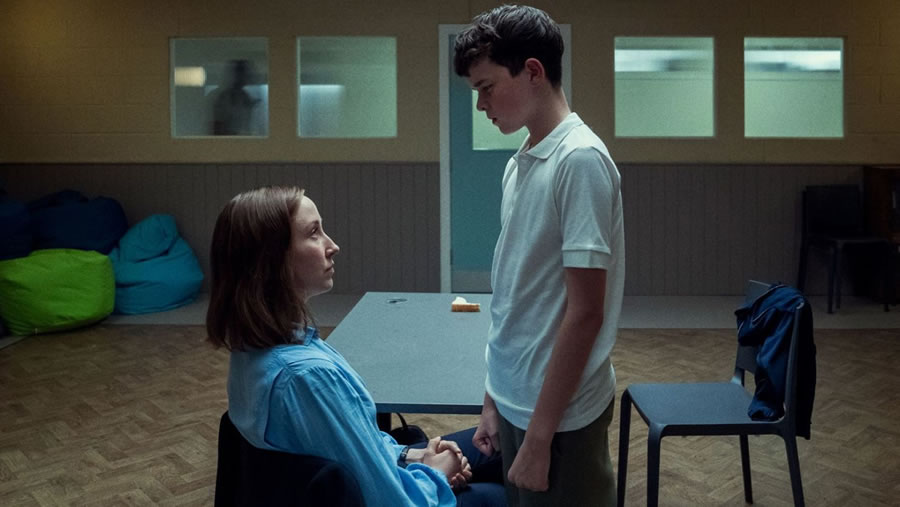
Seven months after the murder, we witness the most chilling and lamentable episode of “Adolescence,” the third, with a psychologist’s visit tasked with creating a new mental profile of Miller for the defense. It reveals the consequences of his early access to social media, these male communities, and adult content unsuitable for his age, fostering distorted and dangerous ideas about women and how to behave toward them.
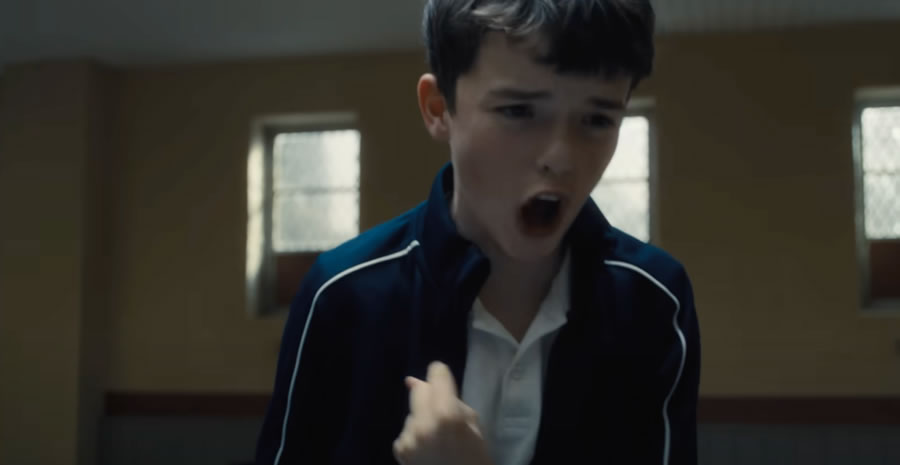
The way the conversation evolves—how this 13-year-old shifts from innocence and playfulness to unbridled anger, insults, hints of power, and disdain—lays bare what’s brewing in plain sight of society: potential gender-based attackers.
The final chapter, set 13 months later, returns to the family nucleus, delving into the accusations from their surroundings they’ve had to endure while trying to move forward and rebuild. The storytelling seeks to fix the gaze on a society that judges and stigmatizes as if it weren’t part of the problem. This chapter leaves room for silence—not the uncomfortable kind of earlier episodes, but one born of the bitter taste of a harsh reality and the emptiness of a youth sinking into ideas about masculinity and the war between the sexes.
The Series’ Impact
“Adolescence,” co-produced by Brad Pitt and directed entirely by Philip Barantini, is a immense technical achievement that, without the overwhelming and immersive effect of its single-shot sequences, might not have garnered the attention it has. Beyond the excitement it generates and the wealth of details about its production, the series’ essence is its urgent call to parents, educators, governments, and society as a whole to stop ignoring and downplaying the creation and spread of cultures and communities that fuel the radicalization of ideologies encouraging hatred toward women.
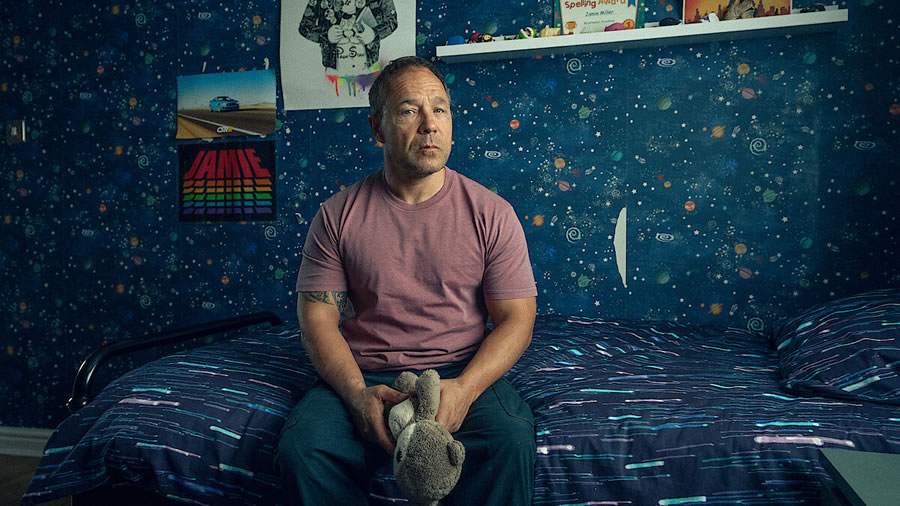
In England, the series has already had an initial political impact, with a proposal from MP Anneliese Midgley to screen it in parliament and schools as a first step to counter misogyny and youth radicalization. This week, the Minister for Women and Equalities, Bridget Phillipson, announced a review of smartphone bans in educational settings.
This year, the UK implemented the Online Safety Act, aimed at regulating internet content and protecting users, especially minors, from harmful or illegal material. The debate sparked by “Adolescence” has emerged as one of its first challenges. According to a report from The Guardian last week, pressure has mounted on the independent communications regulator, OFCOM, to tighten regulations on violent and misogynistic content. Criticism has also arisen against Keir Rodney Starmer’s government for rejecting a law banning social media for those under 16.
Attention has also turned to so-called “toxic influencers,” with figures like former footballer and coach Gareth Southgate leading the charge. In the BBC’s annual Richard Dimbleby Lecture, he demanded better role models in these spaces, heightening political pressure to address the current masculinity crisis. We can only hope that debates about shared responsibilities—and, above all, actions—spread worldwide soon, so this production can fully achieve its goal.
<< Go to Spanish version