
03/04/2025
Pablo Larraín Returns to FICCI to Receive Tribute
By Sandra M. Ríos U
X: @sandritamrios
Pablo Larraín returns to FICCI to receive a tribute. | The Chilean filmmaker returns to the Cartagena Film Festival, 18 years later, after standing out for his unique style and a filmography focused on politics, memory, and identity, establishing himself as a key voice in contemporary Latin American cinema.
The Cartagena International Film Festival, FICCI, has recognized filmmaker Pablo Larraín since the beginning of his career, whether by including his films in the Latin American Cinema competition (Fuga, Tony Manero, Post Mortem, The Club, No) or in the gala or special exhibition sections (Neruda, Spencer, Jackie), once his career took off and became international.
Larraín is one of the region’s leading figures who, even after breaking into Hollywood, has managed to maintain his status as an auteur with a fully recognizable style.
Born on August 19, 1976, FICCI had made previous attempts to bring the filmmaker back to Latin America’s oldest film festival, but it hadn’t been possible due to his unstoppable career, tied to Hollywood cinema and the development of several biopics of female figures: Lady Di in Spencer, Jacqueline Kennedy in Jackie, and, most recently, Maria Callas in Maria.
His prolific career boasts a distinctive style that has solidified him as one of the most important voices in contemporary Latin American cinema, excelling as a director, screenwriter, and producer. His work has been characterized by tackling uncomfortable and controversial topics such as Chile’s political history, collective memory, identity, and power, often explored through recognizable, enigmatic, and complex characters.
“The Chilean filmmaker Pablo Larraín has built a filmography that dissects key moments in Chile’s and the world’s recent history, addressing power, memory, and politics through the emotional connections of his protagonists, creating a cinematic language and an unmistakable visual aesthetic. From works like No (2012), which explored the plebiscite that marked the end of Pinochet’s dictatorship, to his portraits of iconic figures like Jackie (2016) and Spencer (2021), Larraín has been internationally recognized as one of the most innovative directors of today’s cinematic landscape,” FICCI stated. This morning, from the Bogotá Cinematheque, the festival announced the lineup for its 64th edition, which will take place from April 1 to 6.
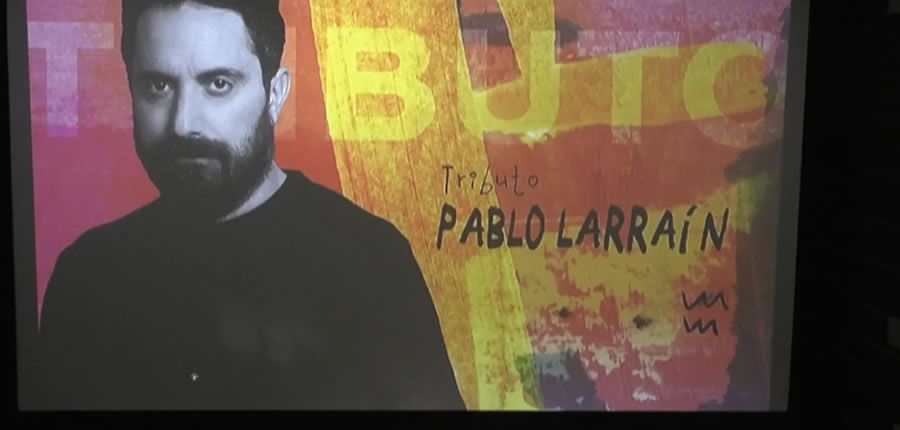
Larraín comes from an influential family in Chilean politics and elite circles. He is the son of Hernán Larraín, a prominent conservative politician, former senator, and ex-president of the right-wing Independent Democratic Union (UDI), a party that supported Augusto Pinochet’s legacy, and Magdalena Matte, former Minister of Housing and Urban Development during Sebastián Piñera’s first administration. Despite his ties to this right-wing environment, Larraín has developed a filmography that openly critiques the aftermath of Chile’s military dictatorship, making his anti-Pinochet stance clear.
Pablo Larraín is an artist by trade. He studied Audiovisual Communication at the University of Arts, Sciences, and Communication (UNIACC) in Santiago, which provided him with the technical and creative tools to break into the film world. Three years before releasing his debut feature, and driven by his passion for cinematic art, he founded the production company Fábula in 2003 with his brother Juan de Dios Larraín.
This company has become a cornerstone of his career, allowing him to develop projects in film, television, and advertising while also supporting other emerging directors with unique proposals, such as Sebastián Lelio, who won an Oscar for Best International Feature Film for A Fantastic Woman under Fábula; Maite Alberdi, twice nominated for an Oscar for her documentaries The Eternal Memory and The Mole Agent; and Gaspar Antillo (Nobody Knows I’m Here).
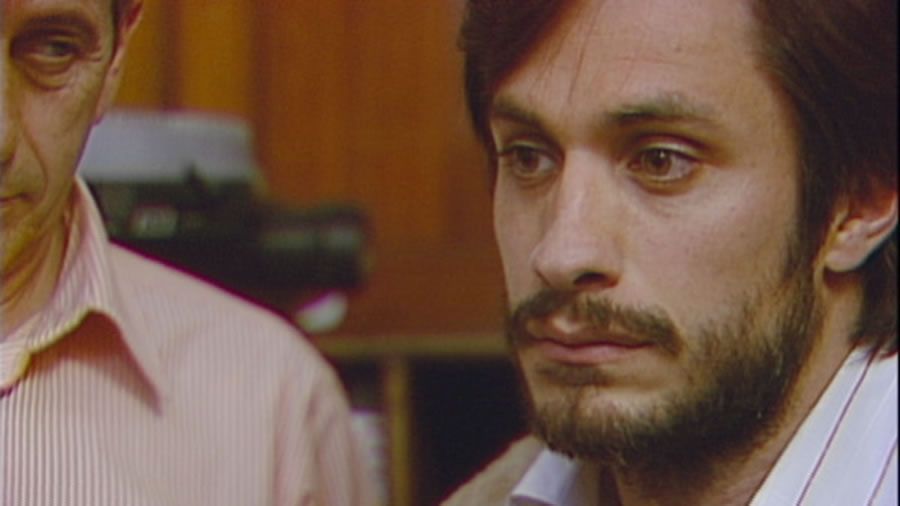
Fuga, his first feature film, premiered internationally at the 46th Cartagena International Film Festival in February 2006. The film tells the story of an obsessive musician whose life falls apart. This was followed by a sort of trilogy dedicated to the effects of Pinochet’s dictatorship and its consequences on Chilean collective memory: Tony Manero (2008)—undoubtedly the standout of this period—Post Mortem (2010), and No (2012). All three films share an oppressive atmosphere and a focus on characters trapped by historical circumstances.
Later came a thematic shift with The Club (2015), a dark drama about a group of pedophile priests exiled by the Catholic Church to a remote coastal town in Chile. With this film, Larraín won the Silver Bear Grand Jury Prize at the Berlin Film Festival and earned a Golden Globe nomination. (You might also be interested in: Pablo Larraín: A Cinematic Exploration of Monsters, Memories, and Dictatorship).
In 2016, he began his biopics, dissecting the lives of powerful and visible historical figures from unconventional perspectives and with meticulous aesthetics, daring to blur the lines between reality and fiction, pushing new narratives for the genre in what he has called “imaginary portraits.” The starting point was Neruda, which opened Hollywood’s doors for him, focusing on the poet’s persecution during Gabriel González Videla’s government and featuring Mexican actor Gael García Bernal. Then came Jackie, his English-language debut, which garnered several nominations, including the Oscars, SAG Awards, and Golden Globes, with a standout performance by Natalie Portman as Jacqueline Kennedy in the days following John F. Kennedy’s assassination.

Larraín has created a unique partnership between actress and character, elevating the careers of his leading ladies. After Portman came Kristen Stewart in Spencer, and most recently Angelina Jolie, who hadn’t acted in a film for three years and hadn’t taken on an intense, personal project like Maria, inspired by the life of soprano Maria Callas.
The Chilean filmmaker has balanced Hollywood productions with more personal projects like Ema (2019), about a dancer (Mariana Di Girolamo) navigating the fallout of a failed adoption, using dance and vibrant colors to explore freedom and desire, and returned to politics with the satire El Conde (2023), imagining Pinochet as a vampire.
Pablo Larraín has not escaped criticism in his home country for his stances on power structures and the social scars left by the dictatorship, but no one can deny his authenticity, provocativeness, and rejection of conventions, as well as his pursuit of a narrative that prioritizes emotion over fact and highlights the contradictions and ambiguities of his characters.
<< Go to Spanish version