
01/22/2025
Review of "Emilia Pérez" - Between Artistic Ambition and Cultural Misstep
By Sandra M Ríos U
Twitter: @sandritamrios
Review of "Emilia Pérez": Between Artistic Ambition and Cultural Misstep | Jacques Audiard's new film blends opera and cinema to uniquely tell the story of a Mexican drug lord seeking a gender transition. Despite its artistic ambitions, the movie sparks controversy for its superficial portrayal of Mexican issues and its Europeanized view of Latin American drug trafficking.
In France, they say that the novel "Écoute" by journalist Boris Razon, from which Jacques Audiard started for his story of Emilia Pérez, is a reflection on identity and loneliness. The author, a personal friend of the French director, gave him permission to develop a passage from the literary work: the appearance of a drug lord who wants to transition. Audiard extended this character's life and initially turned it into a four-act opera project. It was the circumstances of the pandemic that transformed it into a cinematic adaptation.
The result is a daring and singular film opera where Audiard takes high artistic risks by experimenting with a feature film that feels like a classic soap opera full of melodrama, tragedy, and romance, while also touching on crime and chase thrillers. This risk is consistent with his career, now heavily criticized for taking sensitive issues in Mexico like drug trafficking and forced disappearances too lightly, something well-known and suffered in Colombia. Moreover, the choice to cast a predominantly international ensemble, as he could not find actresses in Mexico that fit his expectations, according to his account. The film was shot entirely in a studio in Paris.
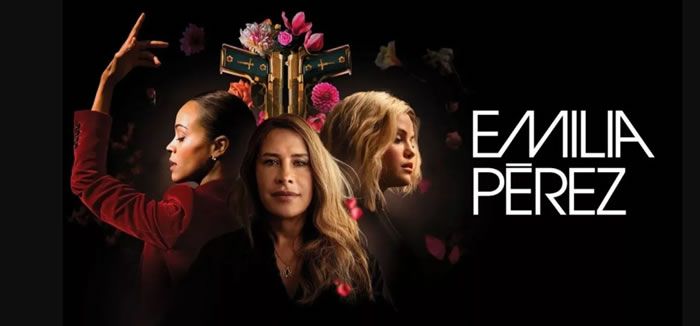
"Emilia Pérez" follows a feared drug lord, Manitas (played by Karla Sofía Gascón), who leads a stable family life that he protects with the wariness of a man with many enemies, but also within a culture and circle that is macho, virile, and patriarchal. He is a husband and father to a young son. However, something is missing in him, so he decides it's time to embrace his true identity, using by force a talented yet undervalued lawyer who is used by a law firm to clean up clients' images when they get into trouble. He tasks her with finding the best doctor and location for his surgery.
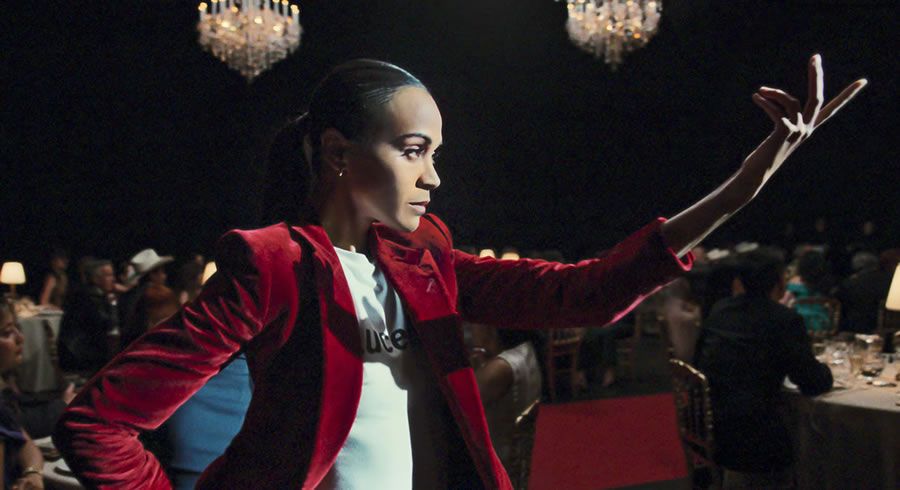
Manitas' transition means completely disappearing, leaving behind his life linked to a horrific criminal past and the one he loves where he is loved, his family. Thus, he becomes Emilia Pérez, a woman who then seeks renewal and redemption, but almost five years later, his paternal call leads him to risk returning to his country. It's left to the viewer to discover whether the debts to the past have truly been settled and forgiven.
This transition takes the character on both a physical journey (Bangkok, Tel Aviv, London, Mexico City) and an emotional one, reflecting the dual and dissimilar nature of humanity, capable of containing both good and bad (just recall the figure of Pablo Escobar here). All this is narrated linearly but operatically, which requires additional effort to connect with and be carried away by this challenging proposition, not only because the style of singing and music isn't conventional in film musicals but also because they appear at unexpected moments and intentionally disassociate from the sequences.

While the result in this aspect isn't consistent, it is stimulating, and in some way, Jacques Audiard manages to keep the story afloat. Much of the challenge in "Emilia Pérez" stems from language barriers. The film is primarily narrated in Spanish, with the cast speaking in English, but Audiard doesn't master both languages, and the soundtrack composers, Clément Ducol and Camille, are French. Furthermore, the Spanish of Zoe Saldana (average) and Selena Gómez (poor), and the non-Mexican Mexican of Édgar Ramírez, can make the story feel caricatured and hard to believe at times. A misstep by Audiard, who like the novel's writer, could have set it in a non-specific place and done it in his own language. He exposed and complicated himself more than necessary in this project. However, it must be acknowledged that the film remains enjoyable. Zoe Saldana delivers a truly committed performance, and Karla Sofía Gascón, a real trans actress, anchors the story, not letting its intended authenticity, explosive, and chaotic energy completely fade.

And if all that already requires too much from the viewer, there's another twist that turns everything upside down due to its lack of surprise, marking the path toward the protagonist's redemption and forgiveness, which is certainly hard to believe in its full scope. The controversial sequence has angered Mexicans the most for its fantastical and misleading portrayal of forced disappearances, framed by the melancholic musical number "Para."
That the perpetrators of these disappearances collaborate with the affected victims as shown in "Emilia Pérez" can affect the understanding of a real issue where the opposite happens. The depiction in these fictional stories contributes (since they are more watched than documentaries) to creating distorted ideas about complex issues, perpetuating those archetypal characters of cinema that do not necessarily match reality.

What I do believe about Jacques Audiard is that he did not intend to offend Mexicans or turn it into a political denouncement, despite discussing corruption and other topics. The truth is "Emilia Pérez" exposes these issues to fundamentally talk about a character's transformation/transition process, identity, sisterhood, and forgiveness, with a tone seeking a message of empathy and hope, accentuated more by sound, music, and photography than anything else.
It's thus interesting how much the film talks about forgiveness, which often asks to be exercised over nearly unforgivable offenses and crimes. The feature has been judged with such harshness that the director's apologies, Karla Sofía Gascón's explanations, and her reports of death threats, or the tears of a frustrated Adriana Paz, the only Mexican actress in the production who also experienced her country's violence firsthand at 18, have been of no avail. The tone of "Emilia Pérez" isn't formal enough to give it the political relevance with which it has been read. It's asking too much from a film where the director himself has admitted he didn't develop his characters' psychology much and that, indeed, they were quite stereotyped. "Emilia Pérez" is caught between its director's artistic ambition and cultural missteps, whether by negligence or intention.
This leads me to the discussion of who can tell what or how in cinema, and we must defend the idea that stories should not have any kind of exclusions. Barriers should only relate to demanding a minimum of responsibility in their treatment, not matters of language or nationality. Whether we like it or not, whether it turned out well or badly, Audiard's vision is nothing more than an exotic and Europeanized look at the region's problems, disguised – like operas themselves – as Latin American authenticity.
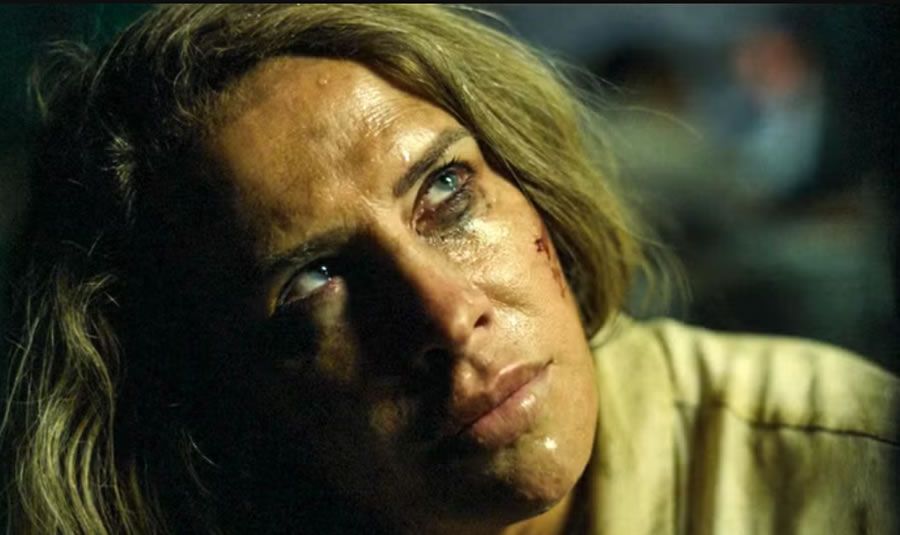
Movies have a factor beyond their control: the times and the era in which they are released. It's possible that thematically, we are not yet ready as an audience to see these approaches from different angles, perspectives, and distances (even uncomfortable, artificial, or comical). Nor are we in times of social media, moralizing, inquisition, and the exaltation of political correctness where everything is over-questioned.
I still think there's no way for this filmmaker of films like "A Prophet," "Dheepan," "Rust and Bone," and "The Sisters Brothers" to suddenly make something to be completely dismissed. I still believe "Emilia Pérez" is a film that can be enjoyable at times, but with festival and organization awards perhaps not so deserved, and dimensions exaggerated by the public.
Technical Sheet
- Direction: Jacques Audiard
- Script: Jacques Audiard
- Duration: 132 minutes
- Genre: Musical, drama, comedy, crime
- Produced by: Jacques Audiard, Pascal Caucheteux, Valérie Schermann, Anthony Vaccarello
- Cast: Zoe Saldana, Karla Sofía Gascón, Adriana Paz, Selena Gómez, Mark Ivanir, Édgar Ramírez
- Cinematography: Paul Guilhaume
- Editing: Juliette Welfling
- Music: Clément Ducol, Camille
- Country: France
- Year: 2024
<< Go to Spanish version