
03/31/2025
Federico Durán revives the filming of El Páramo - Memories 15 years after the Colombian horror classic
Federico Durán revives the filming of El Páramo: Memories 15 years after the Colombian horror classic. | The producer reveals how the military location transformed the script, the challenges of securing permits, and his innovative method with the actors. The Colombian horror classic has returned to theaters as part of the Colombian Cinema Month celebration, taking place throughout April.
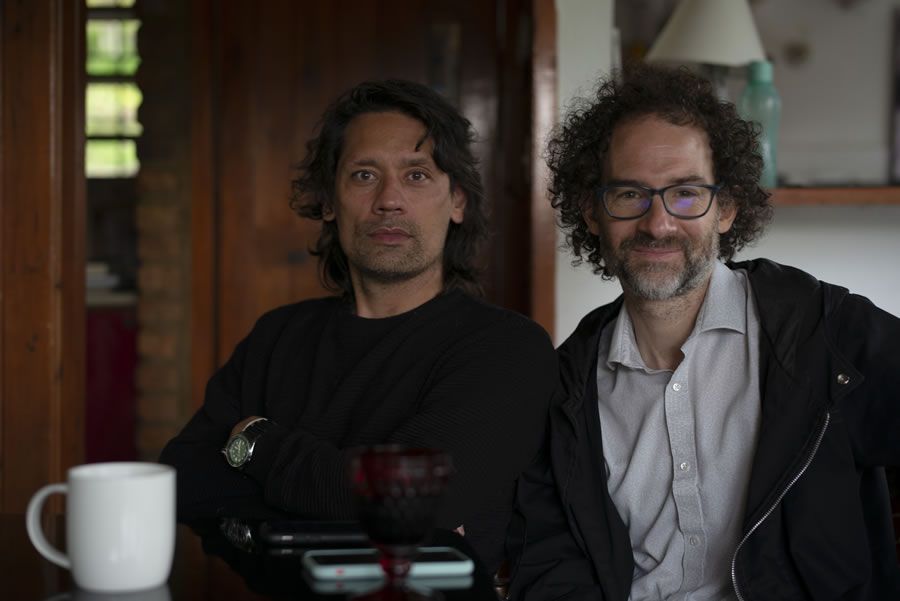
At CineVista, we invited Federico Durán to recall what it was like to make Jaime Osorio Márquez’s (1975-2021) first fiction film—a horror enthusiast who left us a cornerstone of national cinema as his legacy. El Páramo is an atmospheric psychological horror film about soldiers facing a supernatural enemy and their own demons, using the moorland as a character to spark a reflection on violence.
In this first post of a two-part feature, Federico discusses three pillars of this work: the title and the development of the story’s concept; the location and filming; and the preparation with the actors.
The Title and the “White Darkness”
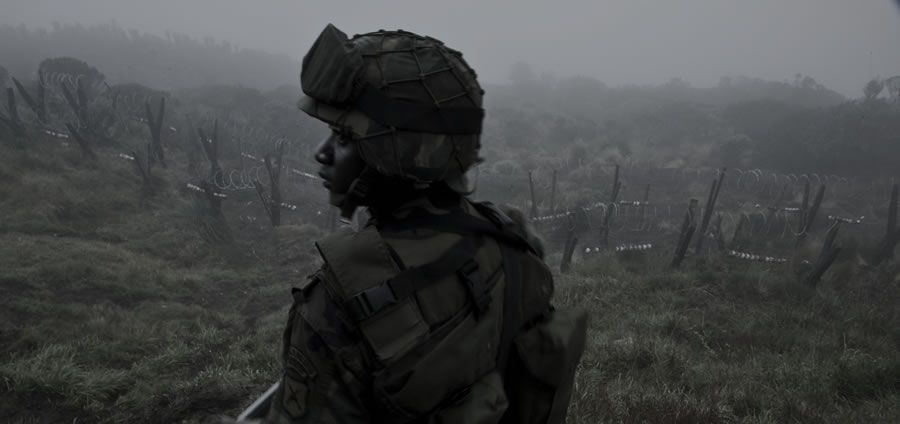
The title El Páramo was there from the very beginning, even before we had the first version of the script, because what we had was the idea of these desolate, eerie, gray, fog-filled places.
From there, Jaime developed a really cool concept he called “white darkness.” In horror films, it’s typically darkness that hides the enemy from view. In El Páramo, however, that darkness was white: the fog, the blinding glare of light reflecting everywhere, which disorients you a little. All of that was always tied to the moorland. The title was there from the start and never changed.
Finding the Location: The Base as a Protagonist
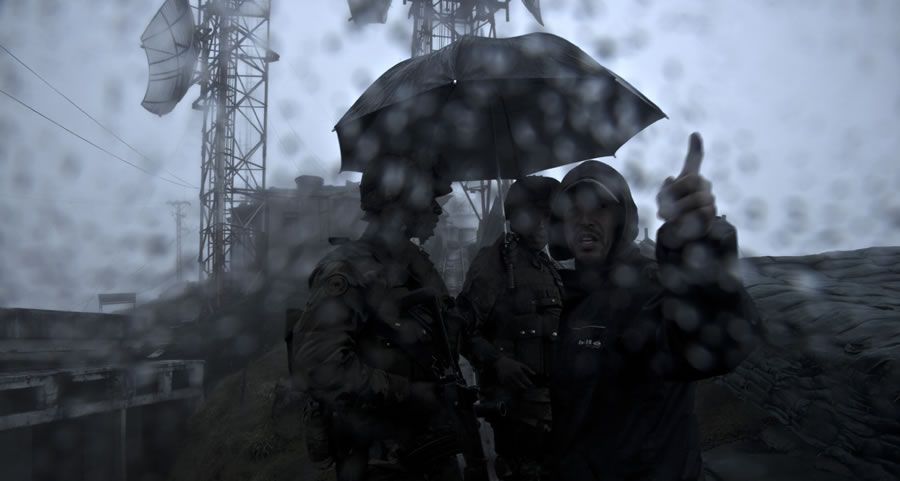
When talking about the filming, I think it’s fair to highlight something crucial: the location—that military base where we shot about two-thirds of the movie. That location became a character in itself and transformed the script. There’s a point where the script stops being just a story and starts turning into images, perspectives, and decisions about how to work with the actors.
We had a story we loved, but we didn’t know how we’d pull it off because we couldn’t find the right location. About a year and a half before shooting, we began adapting the script based on what we discovered at the base, tailoring it more and more, thinking about how we’d frame the shots and sequences. That was fundamental, though during pre-production, doubts arose about filming in such a challenging place.
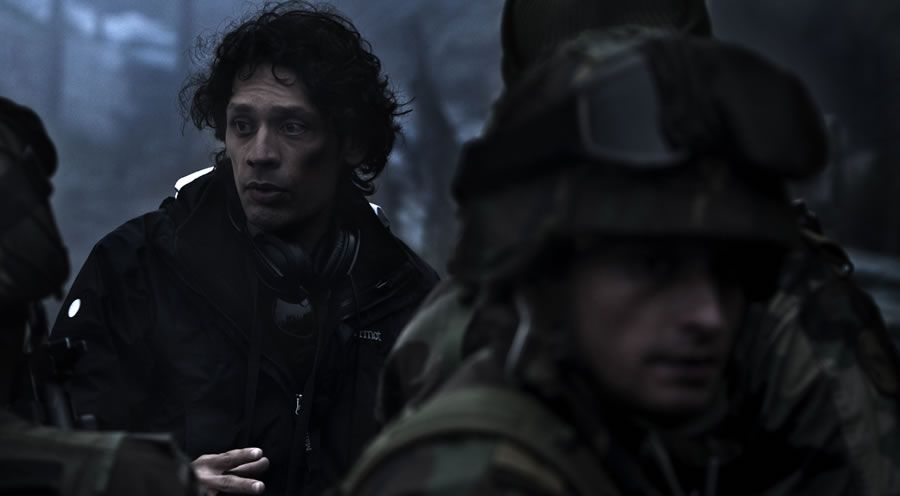
Jaime started scouting locations with several assistants along the Eastern Cordillera. Naturally, the first choice was something near Bogotá for logistical ease, so they explored all the nearby moorlands but couldn’t find the ideal spot. I’m not sure if today, knowing what we were looking for, we’d have found it. Unfortunately, I wasn’t part of that initial search—and I say unfortunately because there’s a huge difference between looking for a location you’ll have to modify (where you settle for something basic because you know you’ll build on it) and finding one that’s practically ready. Later, we went to Los Nevados National Park and visited several spots near the Nevado del Ruiz volcano. I’d tell Jaime, “Look, I can see the movie here, but I can’t see the shoot. This might be too crazy a challenge, and maybe we won’t pull it off.”
One day, as we were leaving the park after a couple of days there, we were driving and saw a young soldier (I say “young” because he was about 18) walking. We saw him climbing a road, stopped, and asked where he was headed. He said, “To the base,” so we offered him a ride. When he got in, we started questioning him: “What base? What’s there?” He told us it was a military base with some antennas, which piqued our interest. I remember he was carrying a little bag—something pretty sad. When we asked what was in it, he said, “A bone.” Just one, small enough to fit in a fist, for the soup for his whole platoon of about 40. It struck us.
When we arrived, the soldier showed us some stairs (the very ones that appear in the film as they are) and we asked if we could go up. He said only to a certain point, and beyond that, we’d need authorization. Jaime and I got out, and when we saw the place, we said, “This is incredible.” We reached a guard post where the soldier introduced us, but they wouldn’t let us go further. We learned the base belonged to the Manizales battalion, and from there, we started the process to get permits.
Fifteen days later, we were able to see the full base and were blown away. From that moment, we began a long process with the National Army and, separately, with the local battalion, which always supported us. Though the permits kept getting tangled and delayed, the battalion always said yes whenever we wanted to visit. The base was neglected, so we built them bathrooms, a kitchen, and dormitories—and left them there.
The day before we were set to start filming, the battalion colonel told us, “I got a message from the National Army, and I can’t let you in.” It was a shock. Luckily, I’d already spoken with the then-Minister of Culture, Paula Marcela Moreno, and explained the situation: we weren’t damaging the base or jeopardizing national security. The Army had said the film didn’t reflect their values, but the minister stepped in with an amazing letter, reminding them they couldn’t demand it be propaganda and that, on the contrary, it was a cultural project that would boost the country’s image. Thanks to that, we got the green light the next day.
We Hid the Script from the Actors
The actors’ vulnerability in embodying their characters was crucial because they were experiencing something akin to what many soldiers go through at that base. Plus, the location’s visual impact was stunning.
Working with the actors was fascinating thanks to Jaime’s idea: we didn’t reveal the full script to them. They all had acting training, but for many, this was their first film. Some had done theater or TV, but most were debuting in cinema. We did preparation with coach Manolo Orjuela, but we didn’t work from the script or scenes—instead, we focused on the characters:
- Ponce: A soldier with a wife and a child on the way.
- The Medic: A guy who no longer wanted to be in that squad because they did unethical things, against human rights.
- Cortés: Saw the squad as his family. “You’re either with me or against me.”
- The Sergeant: Didn’t care what he had to trample over to complete the mission and save everyone.
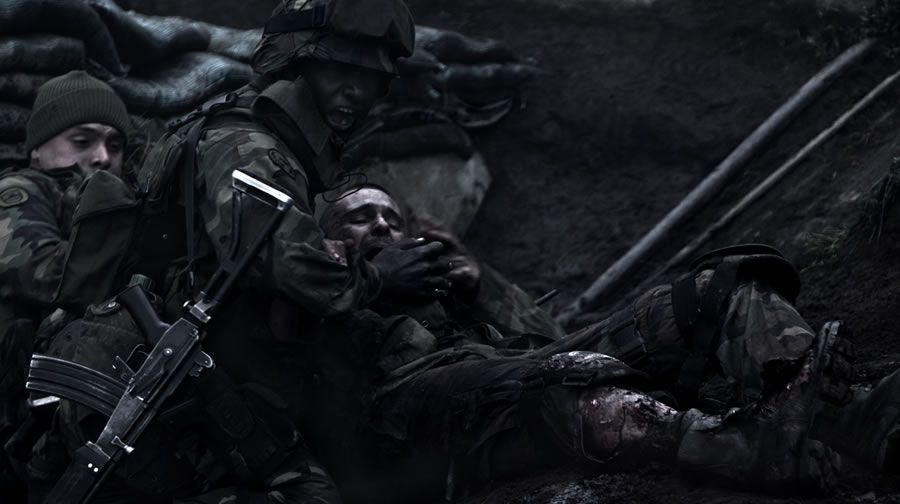
There was acting, physical, and even military training (they spent time at a barracks, doing target practice, shooting), but we never told them the full story. At one point, we gave them the script and then took it away. So they’d arrive on set with only a vague idea of what was happening, and Jaime would say, “You’re coming from this, this just happened to you.”
We’d made films with heavy improvisation or rigid scripts, but we’d never hidden the plot. This forced them to react more organically. Their lack of extensive experience helped because they were more open to the challenge. The whole team felt it was a genuine approach, an acting challenge, and that was the most valuable part.
Read the second part of this special here.
Audiovisual material courtesy of: Rhayuela Films, Federico Durán, Dopping Fotografía, Jose Luis Rugeles.
<< Go to Spanish version