
04/01/2025
The hidden fears that gave life to "El Páramo" - Memories 15 years after its filming
The hidden fears that gave life to "El Páramo": Memories 15 years after its filming. | The producer of El Páramo reveals how the armed conflict and fear of the paranormal inspired this Colombian horror classic. Fifteen years after its filming, he shares production challenges, the choice of genre to reflect on violence, and the decision behind its alternative ending.
This is the second part of the special on the Memories of El Páramo, the Colombian horror film classic that has returned to theaters to celebrate Colombian Cinema Month throughout April.
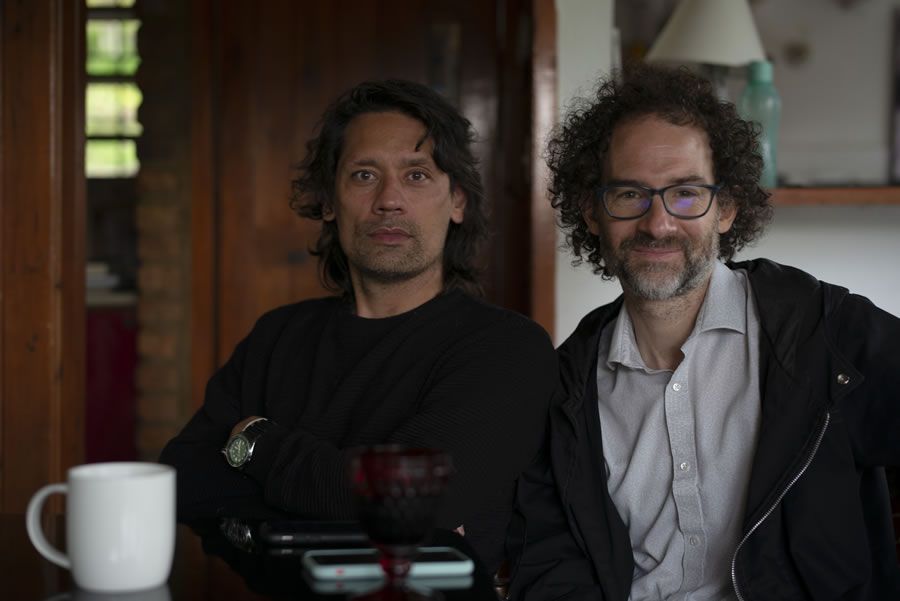
Federico Durán, producer of the feature film, shares his memories of the legacy work of Jaime Osorio Márquez (1975-2021).
What inspired the story
In a country like ours, where the armed conflict has spent so many years degrading principles about good and evil, about who the good guys and bad guys are, about what’s valid and what isn’t, the violence that has confronted very marginalized populations with diverse cultures and customs has also transformed and taken hold of many mediums.
There was something very powerful about how these marginalized communities defend themselves, often the ones who bear the brunt of the conflict.
A shared fear
In the anecdotes we gathered from acquaintances, from people who had been in military service, and ordinary citizens of all ages and from many places—especially from the country’s periphery, in the jungles and mountains—they all agreed that what they feared most was witchcraft. It wasn’t bullets or enemy fire, but being attacked with paranormal and metaphysical elements they didn’t know how to defend against. I think even after all this time, that might still hold true.
In the case of soldiers and military personnel, they’re trained for combat violence—how to attack with bullets and defend against enemy gunfire—but they’re never prepared for the intangible. It’s a world that exists in our country, in many places, but one that we Westerners deny or pretend doesn’t exist.
Discerning the real enemy
Another key point in developing the story—one that unfortunately remains relevant today—is that the conflict has lasted so long and deteriorated so much that the military has also committed crimes against humanity and violated human rights. So, there isn’t just one enemy side. Who is the real enemy? Who’s good? Who’s bad? These are universal questions every society in conflict asks itself because it needs to identify an enemy, someone to hate, to attack and eliminate. And for that, we look to someone credible to tell us who that is.
Knowing that enemy clearly gives us a kind of peace, but we don’t dig deeper into why we’re told “those people over there” are the bad guys. So, there’s a very important thesis in the film about how we’re willing to hate for any reason and turn someone into an enemy without knowing why they might be one—or how, on the contrary, they could be a victim, a defenseless woman, or who knows what. Sadly, that’s been happening for decades here in Colombia and continues today.
These two profound theses have existed since the genesis of El Páramo and were always very present when Jaime and I worked on every stage of the project.
The film’s genre: Horror
Jaime was a lifelong lover of horror, a great connoisseur of the genre, so it was natural for him to have this inclination to turn things tense and terrifying. Although it was his first film, his first fictional work, we’d already filmed a lot together, and he had this very, very strong tendency.
As we started working with Jaime, I realized there was really interesting potential in horror that I loved—and that I still try to explore today. Horror works with a cinematic foundation that greatly enriches audiovisuals. Horror needs to strongly dissociate image from sound because the less I see what’s attacking me, the less I can discern that evil, that monster, whatever it is I’m supposed to fear, the more afraid I’ll be. If I see it, if it’s discernible, I lose that ability to be terrified, no matter how ugly or grotesque it might be. A monster is far more terrifying when I work with imagination, sound, and off-screen space.
Cinematic language: Handheld camera
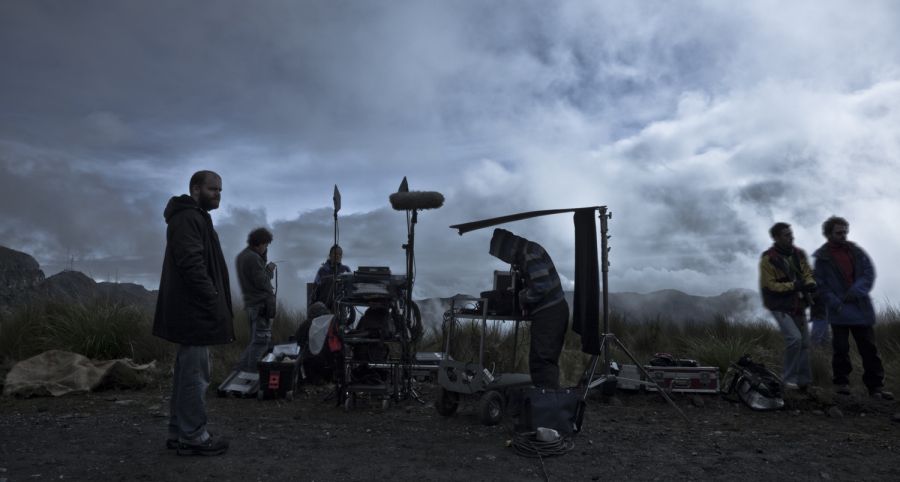
We kept the camera on the characters’ shoulders, looking toward the back of the screen, but in that background, the viewer can’t see anything. You know the character is looking at something, trying to figure out what’s there, but in the distance, there’s nothing. So, the viewer shares the character’s vision, trying to discern what’s in front of them, but they can’t see it—whether because of fog, darkness, or even out-of-focus elements, which started playing a role in pre-production with the cinematographer and the visual style Jaime handled.
Cinematic references for the story
El Páramo features a group, a squad of soldiers searching for an enemy they don’t know what or who it is. We didn’t set out to make references in the film, but in some way, we had films we were passionate about in mind, like Alien or Apocalypse Now.
Jaime’s vast knowledge of everything he’d seen and consumed in horror made him more perceptive. There were even moments when he’d say, “No, this has to be original. Let’s do it this way,” or he’d spot a similarity to something and say, “No, this is going to look like that, so it has to be original.”
Challenges of the paranormal and the film’s ending
One discussion that carried through from the scriptwriting, pre-production, filming, and post-production had to do with the female presence and the ending—about who she was or how to define her within the friend-or-foe dynamic.
Throughout the script process, we were told that this character, who functions as a parable, was getting lost. There was a lot of pressure to have a more definitive ending, more in line with the horror genre, but Jaime wanted a more open ending, one that provoked reflection in the viewer.
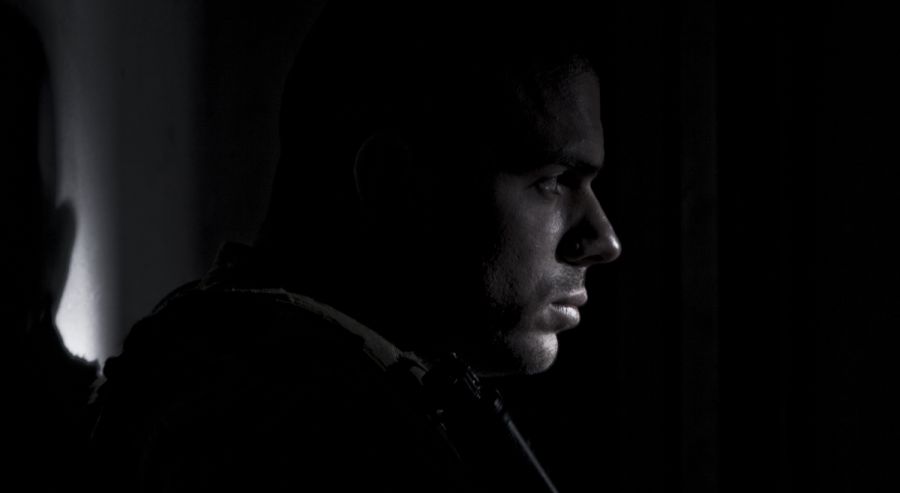
That decision by Jaime affected funding and the potential sales projection. It was based less on originality and more on not wanting to give the audience a conventional film closure, but rather a more auteur, proposal-driven one. We reached an agreement to shoot an alternative ending so we could handle it in editing. Convincing Jaime was a process because he was very set on the ending he wanted, and filming an alternative ending was tough due to time pressures.
In post-production, after a first cut had been made, we reviewed all the material and recovered the alternative ending, which ended up being the one used—not the initial one proposed. It was really interesting because, although Jaime had discarded it, when we found it, he was the first to embrace it and say, “This is amazing.”
You can read the first part of this special here.
Audiovisual material courtesy of: Rhayuela Films, Federico Durán, Dopping Fotografía, Jose Luis Rugeles.
<< Go to Spanish version