
05/06/2025
How Franco Lolli Created the Most Powerful Scene in “Gente de Bien”
How Franco Lolli Created the Most Powerful Scene in “Gente de Bien”
Colombian director Franco Lolli analyzes the sandwich scene in Gente de Bien, where María Isabel (Alejandra Borrero) tries to console Eric after he is bullied. Improvised due to challenges during filming, this scene captures the drama and family contrast at the heart of Lolli’s debut feature.
Ten years after Gente de Bien premiered in theaters, we invited director Franco Lolli to analyze his favorite scene from the film, coinciding with its rerelease in cinemas this May as part of the Colombian Cinema Month classics.
By Franco Lolli
The Sandwich Scene: A Farewell to a Dream
The scene I’d like to analyze is the final one at the Arbeláez country house, just before María Isabel, played by Alejandra Borrero, returns Eric (Brayan) to Bogotá. It’s the sandwich scene, or the farewell scene—the end of a dream.
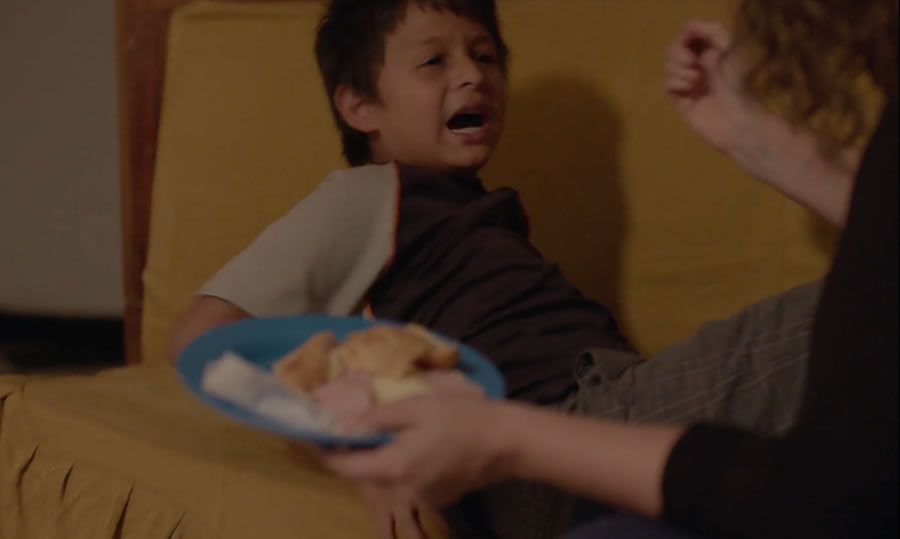
This scene follows what I consider the film’s climax: the pool sequence with the children, where we see Eric being bullied by upper-class kids. It’s a long scene where Eric feels out of place, is mocked for wetting the bed, and has a ball thrown at his face. The next scene is where María Isabel tries to comfort him, feed him, and reintegrate him into the family she’s trying to build, but which has spiraled out of her control. Eric only wants to go home and tells her she’s not his mother.
From Script to Improvisation: The Filming Crisis
I’m discussing both scenes, though I’m focusing on the second one—the nighttime scene—because they were originally one during filming. Everything was meant to happen at the pool: during the bullying, María Isabel would intervene, Eric would lash out, tell her to leave, and say she wasn’t his mother. But, as often happens on set, the film spoke to me. It told me the two moments couldn’t fit in one scene.

We successfully filmed the pool scene—the bullying, Eric struggling to swim—but I couldn’t integrate María Isabel’s character at the end. Everything we tried with her and the kids felt artificial. We cut the scene that day with great frustration, despite the strong footage we’d captured. We were desperate because María Isabel’s dramatic turn was essential, and we didn’t have it. We only had one afternoon and night left to shoot at that location before returning to Bogotá.

With department heads—Claudia Pedraza (assistant director), Oscar Durán (cinematographer), Matthieu Perrot (sound), and Marcela Gómez (art director)—we sat down, and I admitted I felt lost. Oscar Durán suggested a scene close to what we ended up with: Eric, depressed after the bullying, lying in the living room, refusing to see anyone. María Isabel would try to cheer him up with a glass of milk, but he’d throw it in her face. This would’ve required washing and changing Alejandra’s clothes each take, wasting time. That’s when we came up with the sandwich idea—her bringing him food—and the scene evolved through improvisation between Brayan and Alejandra.
(You may also be interested in: Gente de Bien – 5 Essential Film Production Lessons by Capucine Mahé)
Staging is About Setting the Stage and Letting Cinema Happen
By then, we were nearing the end of the shoot, and both Brayan and Alejandra were exhausted. That fatigue enriched the scene. María Isabel tries repeatedly to get Eric to eat, but he refuses, eventually kicking her and saying, “You’re not my mother.” In that moment, she grabs his face in anger, realizing the situation has slipped from her grasp. For me, this is possibly the film’s most powerful moment, especially as her family watches with judgment. This scene encapsulates the film’s dramatic, thematic, and cinematic core.
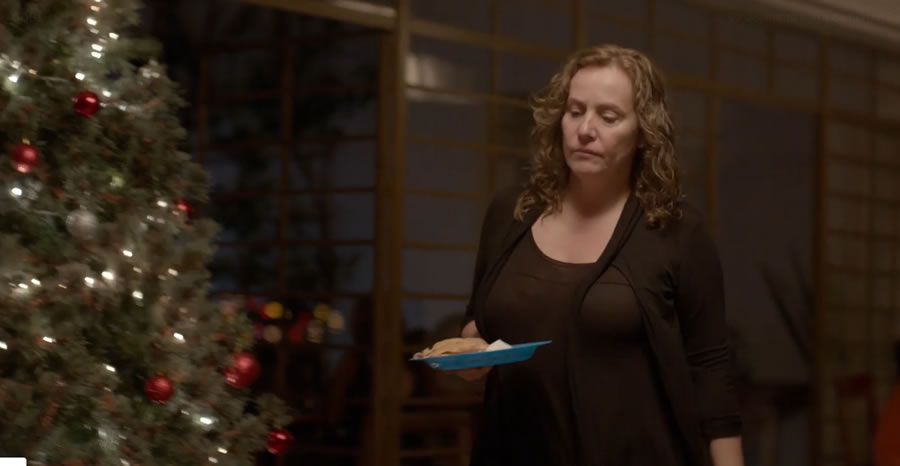
I love this sequence because it was the first time I staged a scene this way. Since it wasn’t scripted, I placed the family around the house, doing what they’d do on a normal vacation night—some drinking and playing games outside, others playing cards in the living room—while Alejandra and Brayan played out the sandwich scene. When we started, I gave them total freedom: Alejandra could go wherever she wanted, Brayan could retreat to his room, and the others would react naturally.

I love the scene because it feels like a real night at a country estate with this kind of family, yet it carries the drama of Eric and María Isabel’s struggle. It highlights the contrast between the family’s happiness and camaraderie and two characters who are outsiders: Eric, who doesn’t belong and wants to return to his real family, and María Isabel, whose act of charity—bringing Eric to a place where he’s unwanted—goes against her family’s wishes. The way they look at her, especially her daughter’s mix of pity and judgment, and the family’s “this was never going to work” stares, is incredibly powerful.
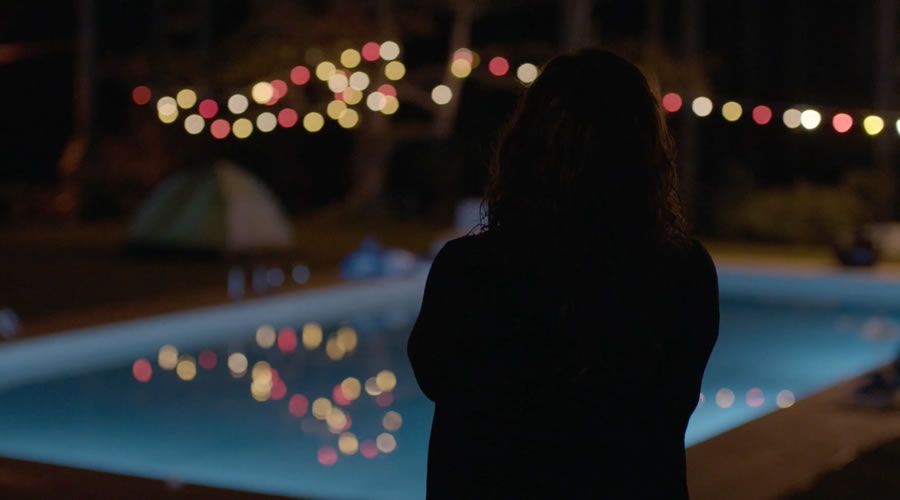
This unfolded organically as we shot, moving the camera quickly from one spot to another. It was one of the happiest and most intense moments of the shoot. I realized something I’d intuited but hadn’t fully experienced: staging sometimes means setting things in place and letting cinema emerge from the reality of the situation, not forcing reality into what was written when it resists. I couldn’t have imagined the unplanned shot where Alejandra walks away, depressed, toward the pool, with Christmas lights glowing in the background—a shot that recalls the pool drama and María Isabel’s shattered dream of inclusion.
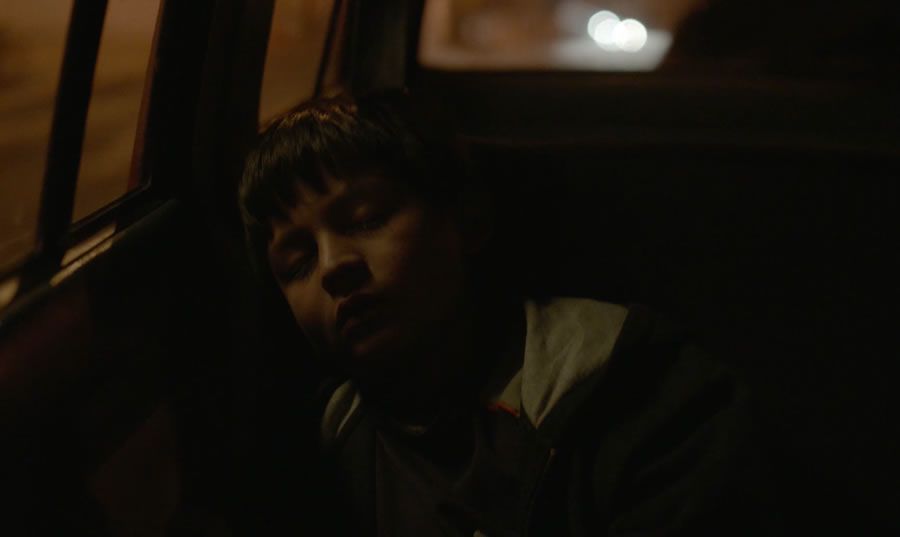
If I’d scripted this, it wouldn’t have turned out as well. This was a major lesson from Gente de Bien: even in the toughest moments, you must trust the process. When a scene doesn’t work, it might be because it’ll work better later, differently, or because a better scene is waiting to be imagined. The ellipsis from day to night, from pool to house, holds something truer and stronger than if I’d filmed it all at the pool as planned. The nighttime scene is perhaps the best in the film, or at least among the best.
Watch the full scene described by Franco Lolli here:
Scene and image credit: Evidencia Films
<< Go to Spanish version